

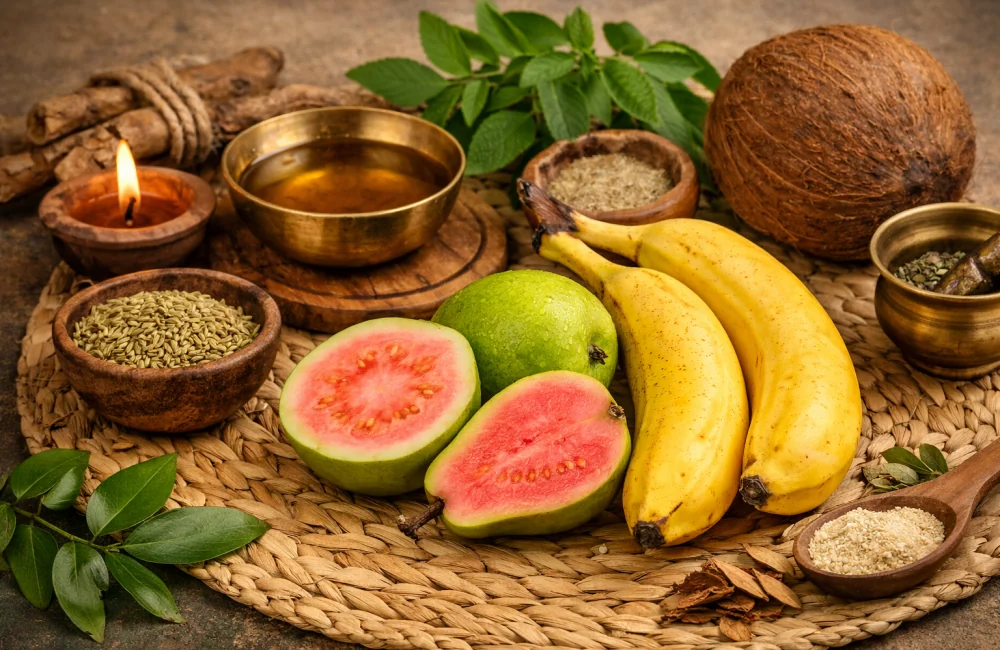
I’ve heard this question more times than I can count: Can we eat banana and guava together?
Usually it comes up in the most random places. Once it was during a college lunch break. Another time my aunt stopped me mid-snack and said, “Don’t mix those fruits… it’s not good for digestion.”
And that was it. No explanation. Just a warning that sounded serious enough to make you pause halfway through your fruit bowl.
So naturally, curiosity kicked in.
After writing about health and food habits for more than a decade, I’ve learned something interesting: many food “rules” people follow are actually half-remembered traditions or misunderstood nutrition advice.
This banana and guava combo happens to be one of those.
Why People Think Banana and Guava Shouldn’t Be Eaten Together
If you grew up hearing this myth, you’re not alone.
A lot of people believe mixing fruits with different textures or digestion speeds can upset the stomach. Banana is soft and heavy, while guava is slightly crunchy and rich in fiber. Somewhere along the line, that difference turned into a warning: don’t eat them together.
But here’s the thing.
There isn’t any solid nutritional evidence showing that combining these two fruits is harmful for most people.
In fact, both fruits are pretty healthy on their own.
- Bananas provide potassium and natural energy
- Guavas are loaded with vitamin C and fiber
- Both contain antioxidants that support general health
So from a simple nutrition point of view, the combination isn’t exactly a disaster waiting to happen.
What Actually Happens When You Eat Them Together
Most healthy people can eat these fruits together without any issues.
Your digestive system is designed to handle mixed foods. Think about a typical meal — rice, vegetables, spices, maybe yogurt. The body already processes combinations all the time.
That said, digestion is a bit personal.
Some people notice slight bloating when they eat certain fruit combinations. That doesn’t mean the pairing is bad for everyone. It just means your stomach might prefer one fruit at a time.
Honestly, the easiest test is simple: eat a small portion and see how your body reacts.
Your gut usually gives better feedback than internet myths.
The Real Reason This Question Keeps Coming Back
Food myths stick around because they often start with a tiny bit of truth.
Traditional health systems like Ayurveda sometimes suggest eating fruits in ways that support easier digestion. That’s less about strict rules and more about understanding how different foods affect the body.
For example, some Ayurvedic practitioners recommend:
- Eating fruits on an empty stomach
- Avoiding overly heavy combinations
- Paying attention to how your body responds to certain foods
Notice something? None of these are hard bans.
They’re more like gentle guidelines.
A Quick Example From Everyday Life
Let’s say you grab breakfast on a busy morning.
You slice a banana, add a few pieces of guava, and maybe sprinkle some nuts on top. It’s quick, refreshing, and probably healthier than most packaged snacks.
Now compare that to skipping breakfast entirely and grabbing a sugary pastry later.
If we’re being honest, the fruit bowl still wins.
Sometimes we overthink small details while ignoring the bigger picture of healthy eating.
When It Might Be Better to Eat Them Separately
There are a few situations where spacing fruits out might help digestion.
For instance:
- If you already have a sensitive stomach
- If you feel heavy after eating large fruit portions
- If you’re recovering from digestive issues
In those cases, keeping meals simpler can feel lighter.
But for the average person? Eating banana and guava together occasionally isn’t something you need to stress about.
The Bigger Lesson Behind This Fruit Myth
After writing about food habits for years, I’ve realized something pretty funny.
People worry a lot about tiny combinations, but forget the bigger basics:
- Eating fresh foods
- Drinking enough water
- Getting decent sleep
- Not living entirely on processed snacks
If those things are mostly in place, your body usually handles fruit combos just fine.
A Thought That Changed How I Look at Food Rules
While reading more about traditional food practices, I came across a few discussions online that explained this myth in a calmer, more balanced way. One article I remember seeing on Why Ayurveda also talked about fruit combinations and digestion in a similar context — focusing more on awareness and moderation rather than strict food bans.
And honestly, that approach makes more sense.
Instead of fearing every fruit pairing, it’s probably better to listen to your body and keep things balanced.
Final Thoughts (From Someone Who Still Eats Both)
So, can we eat banana and guava together?
For most people, yes.
If your stomach handles it well, there’s really no reason to panic about the combination.
Food traditions often carry wisdom, but sometimes the message gets exaggerated as it passes from person to person. What started as gentle advice can easily turn into a dramatic “never do this” rule.
And life’s honestly too short to overthink every fruit bowl.
If you enjoy bananas and guavas together, go ahead and eat them.
Just maybe don’t let your aunt see it. She might still have strong opinions about it.