

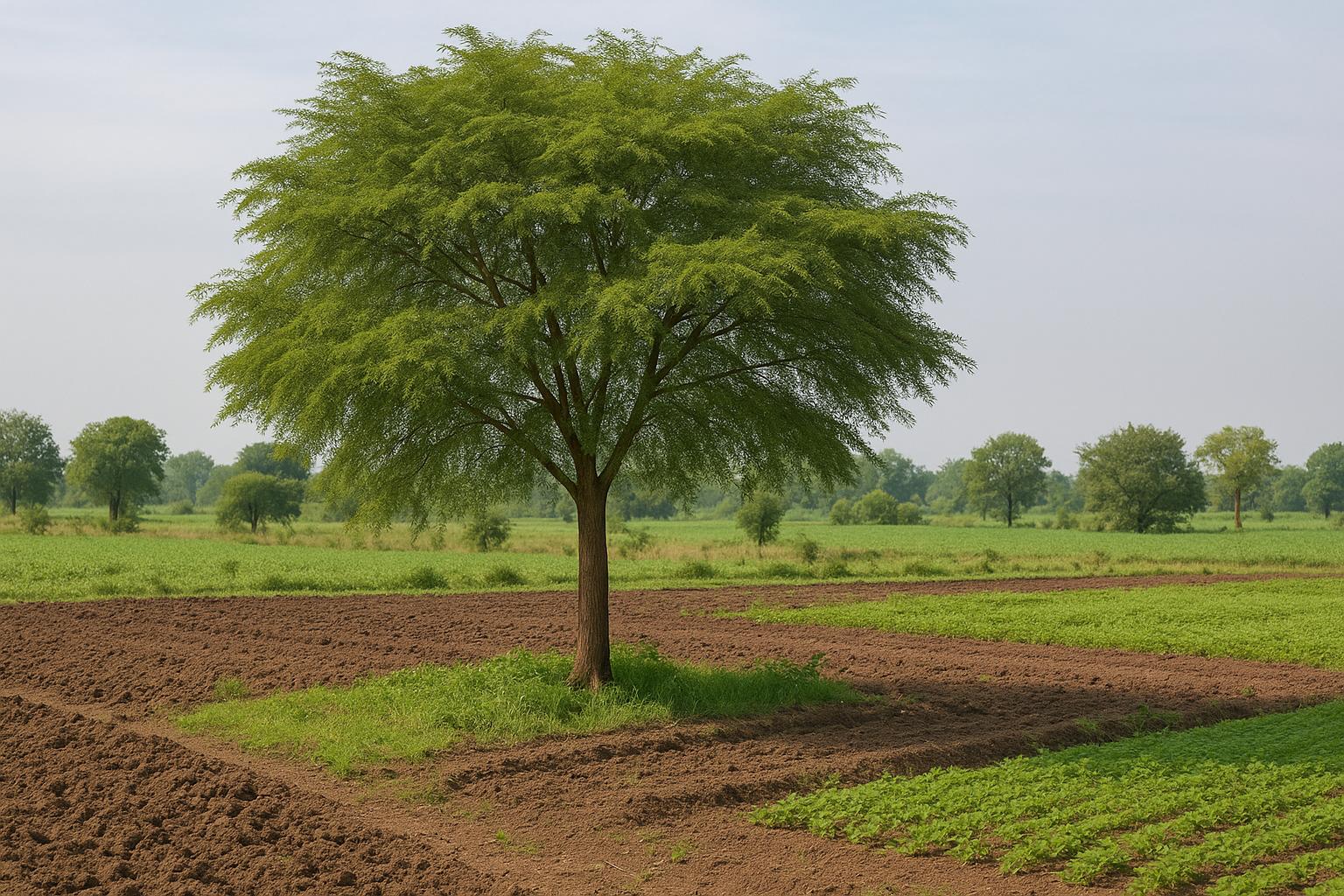
Soil fertility is the foundation of sustainable agriculture. Without healthy soil, productivity declines, water retention weakens, and plant health deteriorates. One overlooked yet highly effective method for revitalizing soil naturally is through the planting of Anjan trees (Hardwickia binata). Native to dry and semi-arid regions of India, the Anjan tree is known for its deep roots, nitrogen interaction, and biomass contribution—all of which directly improve soil structure and fertility.
This article explains how farmers, foresters, and land restorers can utilize Anjan trees to rejuvenate degraded soil, enhance biodiversity, and establish long-term ecological balance across landscapes.
What Makes Anjan Trees Ideal for Soil Improvement?
Anjan trees are drought-tolerant legumes known for their fibrous root systems and high biomass yield. They grow well on poor soils, including shallow, gravelly, and lateritic substrates where conventional crops struggle. Their ability to fix atmospheric nitrogen makes them powerful agents in natural soil enrichment.
They thrive in annual rainfall zones of 400–900 mm and can withstand temperatures up to 47°C. This hardiness makes them ideal for regions facing desertification, soil erosion, or mono-cropping exhaustion.
These are not seasonal plants but long-term biological assets. Over the years, their fallen leaves, bark, and root exudates create a self-reinforcing fertility loop.
How Anjan Trees Improve Soil Fertility Mechanically and Biologically
Anjan trees act on soil through two main pathways: physical restructuring and biological enrichment. Physically, the deep taproots break hardpan layers, enabling better water infiltration and aeration. This is especially important in compacted soils where drainage is limited.
Biologically, the tree contributes to soil health through:
- Rhizobial activity associated with root nodules
- Leaf litter decomposition that increases organic matter
The root zone of Anjan supports mycorrhizal fungi, which improves phosphate uptake. Meanwhile, its slow-decomposing leaves add stable organic carbon, improving humus content.
Research from the Central Agroforestry Research Institute (Jhansi) indicates that fields interplanted with Anjan trees showed a 27% increase in microbial biomass and a 15% rise in soil nitrogen levels within five years.
Can Anjan Trees Be Used in Agroforestry Systems?
Anjan integrates well into agroforestry systems, especially in arid and semi-arid zones. Its upright growth and sparse canopy allow sufficient sunlight for intercrops. This compatibility makes it ideal for silvipasture systems—where trees and grasses coexist to provide fodder and timber.
In Maharashtra and Telangana, farmers are incorporating Anjan into boundary rows and field margins to reduce wind erosion, stabilize yields, and create shaded areas for livestock. Over time, this setup improves root-zone interactions and increases water retention capacity by up to 22%.
For growers ready to integrate it into agroforestry or wasteland development, the best starting point is to Shop Anjan Tree Seeds from certified sources that ensure viable germination and true-to-type genetic strains.
What Role Does Leaf Litter from Anjan Play in Soil Health?
Anjan trees shed leaves seasonally, contributing significantly to soil organic matter. Unlike fast-decomposing foliage like acacia or poplar, Anjan leaves decompose slowly, ensuring a sustained release of nutrients over time.
The leaf litter forms a protective mulch layer, reducing soil temperature fluctuations and moisture loss. This layer suppresses weed growth and fosters a microhabitat for decomposers like earthworms and beneficial bacteria.
The carbon-to-nitrogen ratio of Anjan leaf litter is around 45:1—ideal for slow composting and humus formation. This benefits long-term soil structure without sudden pH imbalances.
How Does Root Exudation Contribute to Soil Chemistry?
Root exudates are chemical compounds secreted by plant roots that influence microbial populations and soil nutrient cycles. Anjan roots release polysaccharides, organic acids, and amino compounds that stimulate beneficial rhizobacteria and fungi.
These microorganisms break down complex minerals and make nutrients bioavailable to surrounding plants. In trials conducted by the Indian Institute of Soil Science (Bhopal), root exudates from Anjan trees improved the availability of phosphorus by 19% and micronutrients like zinc by 13%.
This underground interaction is continuous and strengthens over time, meaning the longer the trees are in place, the more robust the soil microbiome becomes.
“The trees are not just growing; they are healing the earth with every root and every leaf.”
What Is the Carbon Sequestration Potential of Anjan?
Anjan is not only a soil restorer but also a carbon sink. It can sequester 8 to 10 tons of carbon per hectare per year, making it highly suitable for climate-resilient farming and carbon credit models.
Its woody biomass is dense and long-lived, while its deep roots stabilize carbon deeper in the soil profile. Farmers participating in agroforestry schemes are now looking at Anjan as both a soil solution and a revenue stream under carbon offset programs.
Its robust wood is also used in fencing and fuel, reducing dependency on external inputs for rural communities.
Can Anjan Be Used in Soil Reclamation Projects?
Anjan trees are being used extensively in India’s soil reclamation and land restoration efforts. From mining-affected zones in Jharkhand to saline-prone areas in Gujarat, their presence is transforming degraded landscapes.
Because they tolerate poor drainage, shallow soil, and low fertility, they serve as pioneer species—initiating the recovery of harsh lands. Their presence paves the way for secondary planting of grasses, shrubs, or fruit-bearing species.
In the National Afforestation Programme, Anjan is listed among key species used for degraded forest land recovery due to its resilience and restoration capacity.
What Unique Attributes Differentiate Anjan from Other Legume Trees?
While many leguminous trees fix nitrogen, not all are drought-resistant or suitable for drylands. Anjan’s combination of deep rooting, dense wood, and sparse canopy sets it apart.
Unique traits include:
- Hemicryptophytic root profile enabling vertical water access
- High bark tannin content, which deters pests and pathogens
- Extreme temperature resilience (survives above 45°C and below 5°C)
These features make it viable for both conservation forestry and productive farming. It also supports silkworm cultivation, adding a unique dimension for regions practicing sericulture.
How to Establish and Maintain Anjan Tree Plantations
The first step in a successful establishment is proper spacing, which is typically 4 m × 4 m in agroforestry systems or 6 m x 6 m in block plantations. Scarifying seeds prior to sowing and soaking them for a full day increases germination rates.
Only the first two years require irrigation. Trees then rely on the remaining moisture in the soil to survive. Microbial inoculants like Rhizobium and Trichoderma can be applied during transplantation to increase early soil activity instead of using chemical fertilisers.
In the early years, mulching the base shields saplings from soil erosion and temperature shock.
What Are the Broader Ecosystem Benefits of Anjan Trees?
In addition to improving soil fertility, Anjan trees also increase the resilience of ecosystems. Their canopy provides protection from the sun and wind. More birds, insects, and soil organisms flourish in their immediate environment, increasing the biodiversity.
This lessens ecological stress and boosts landscape productivity in arid regions. Additionally, they enhance air quality, lessen dust in open spaces, and improve water percolation, which helps to restore hydrological equilibrium.
According to research from the Tropical Forest Research Institute, groundwater recharge during monsoon seasons was 14% higher in landscapes with Anjan trees scattered throughout than in bare areas.
Are There Challenges in Growing Anjan Trees?
Despite their hardiness, Anjan trees can be difficult to establish in the beginning. Some growers may become discouraged by their sluggish growth in the first two to three years. Planting efficiency can also be decreased by untreated seeds having low germination rates.
In areas with high infestation rates, termites may harm young saplings; however, this can be controlled with natural biopesticides derived from neem. The majority of leaf-chewing pests are discouraged by the tree’s high tannin content.
To guarantee straight boles for timber value or uniform crown architecture for fodder systems, training and pruning are crucial.
FAQs
- Is Anjan suitable for all soil types?
No. While it grows on poor and shallow soils, highly saline or waterlogged soils may hinder root development. - How long does it take for Anjan to improve soil fertility?
Noticeable improvements in organic matter and microbial activity are observed within 3–5 years of planting. - Can crops be grown under Anjan trees?
Yes. Due to their light canopy, intercrops like millets, pulses, and grasses perform well in the understorey. - Is Anjan a good choice for small farms?
Yes, especially along field boundaries or for integration into agroforestry setups. It requires minimal inputs once established. - How much rainfall does Anjan need?
The tree thrives in areas receiving 400–900 mm of annual rainfall. - Can Anjan be used for timber?
Yes. Its wood is extremely durable and termite-resistant, used in construction, agricultural tools, and furniture.