

If you’re planning a trip from Guinea-Bissau to Cameroon, you’re likely looking for a clear, thorough roadmap — and this article serves exactly that purpose. Welcome to your Cameroon eVisa Guide for Citizens of Guinea-Bissau. This guide is designed as a traveler-friendly companion, walking you through everything you need to know about applying for an eVisa to Cameroon: the different visa types, required documents, application steps, processing times, and practical travel advice. Whether you’re going for a short vacation, a longer stay, or just passing through, this guide aims to make the process as smooth as possible.
Let’s dive in — by the end, you should feel confident and prepared to start your Cameroon adventure.
What types of eVisas are available?
When traveling to Cameroon from Guinea-Bissau (or any other country), you have several Cameroon visa types to choose from. Your choice depends on how long you plan to stay, how many times you intend to enter Cameroon, and whether you’re in a hurry or have flexibility. Here are the main categories, along with their characteristics:
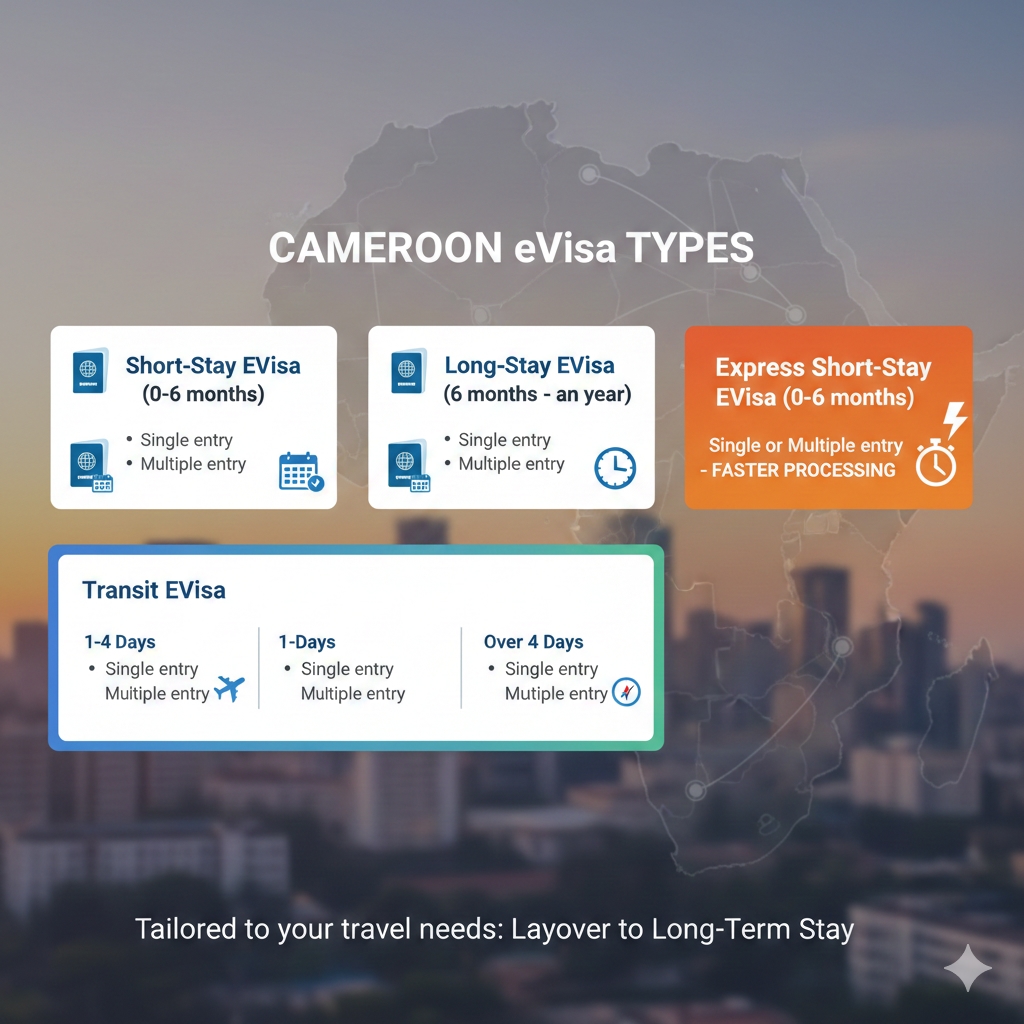
Short-Stay eVisa (0 to 6 months)
-
Single entry — good if you plan one visit and return.
-
Multiple entry — ideal if you anticipate leaving and re-entering Cameroon within your stay period.
Long-Stay eVisa (6 months to 1 year)
-
Single entry — for one extended visit or stay.
-
Multiple entry — useful if you anticipate re-entering during that 6–12 months window.
Express Short-Stay eVisa (0 to 6 months)
-
Single or multiple entry — same as above, but processed faster.
Transit eVisa
-
For travelers passing through Cameroon en route to another country. Options include:
-
Transit for 1–4 days, either single or multiple entry.
-
Transit for over 4 days, with single or multiple entry.
-
These varied types ensure that, whether you’re on a brief layover or a long-term stay, there’s a visa type to fit your needs.
What documents do I need for a Cameroon visa?
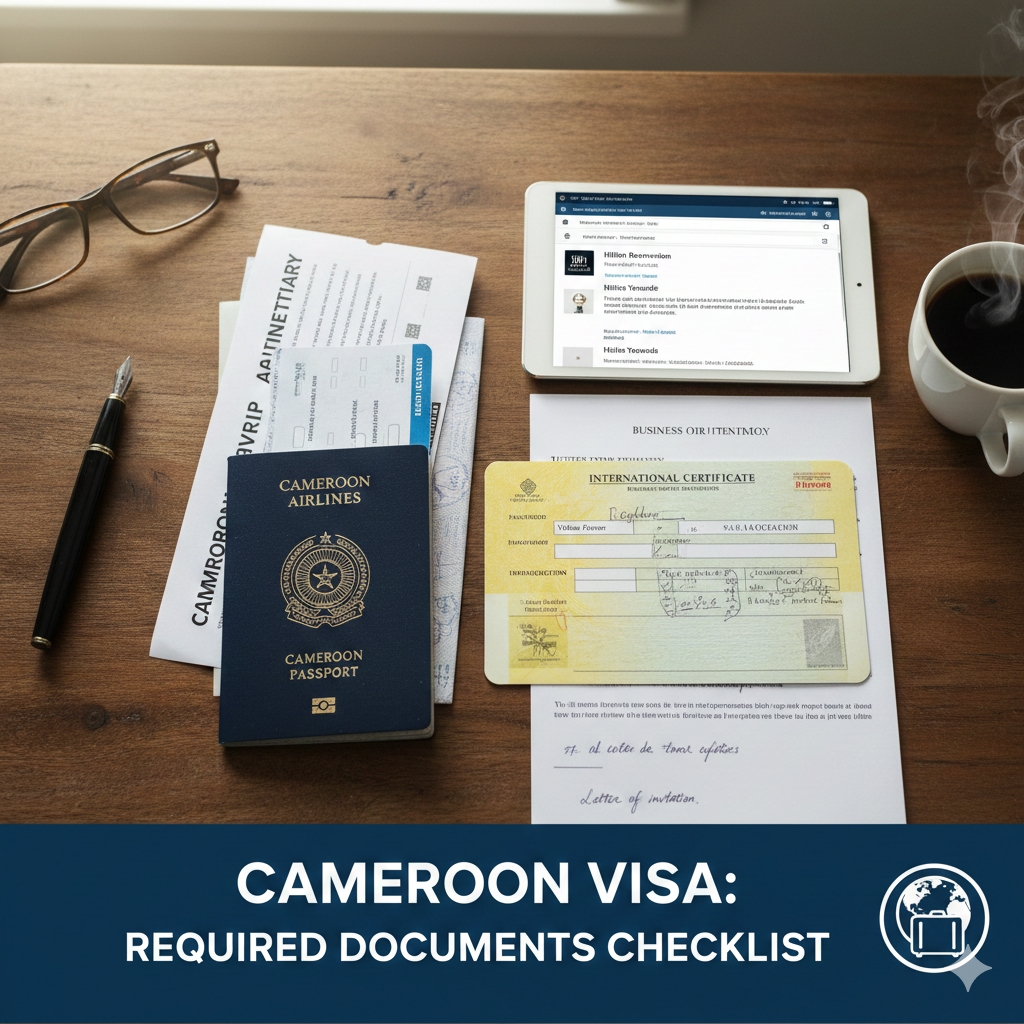
Before you begin your application, make sure you have the right paperwork. Here’s a checklist tailored for travelers, especially those looking for the required document for Cameroon visa.
-
A valid passport (with sufficient validity beyond your planned travel dates)
-
A round-trip plane ticket or flight booking
-
Proof of accommodation in Cameroon — e.g. hotel reservation or a letter of invitation / accommodation certificate if you’re staying with someone.
-
International vaccination certificate (especially for Yellow Fever)
-
Evidence of purpose of visit — e.g. tourism, business, visit friends/family, transit itinerary, etc. Depending on your application, additional documents might be required (invitation letter, mission order, or travel insurance).
Having all these ready before you start will make your application much smoother and increase your chances of success.
What are the 5 basic steps to apply for a visa?
Here’s a step-by-step process — think of this as your personal “to-do” checklist from start to finish.
-
Gather all required documents — passport, flight ticket, accommodation proof or invitation, vaccination certificate, purpose of visit documentation, etc.
-
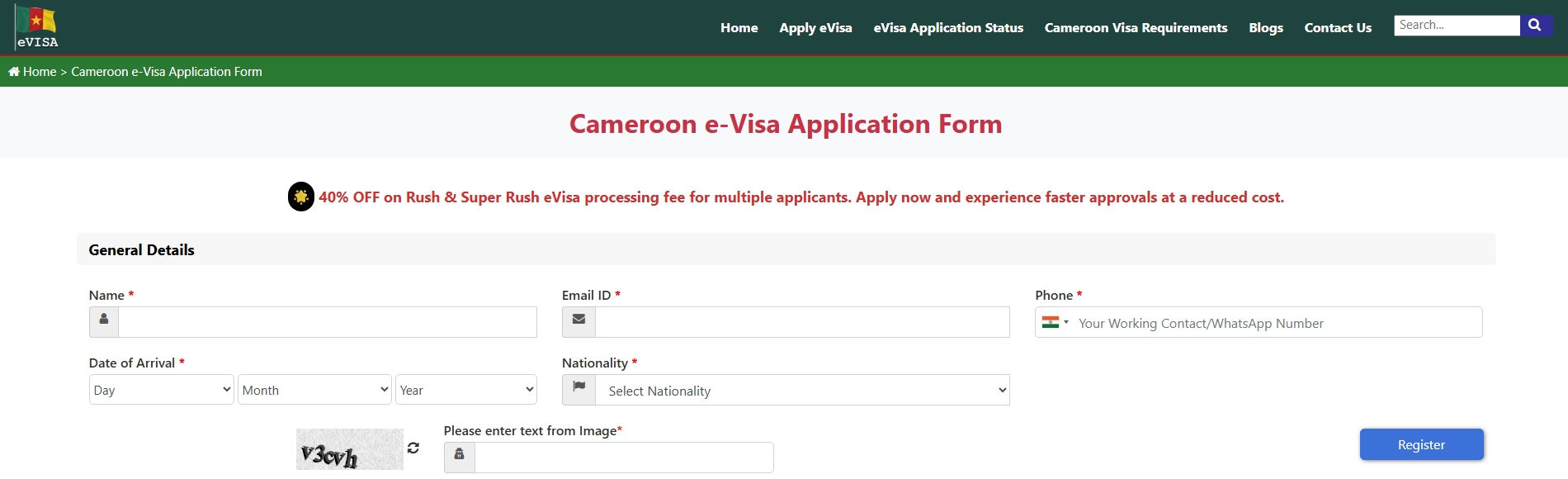
Fill in the online application form on the portal for Cameroon eVisa, entering personal and travel details.
-
Upload scanned supporting documents in the proper format (clear scans/photos) and ensure all data matches exactly.
-
Apply and choose your processing speed — either standard (normal) or express/expedited if you’re in a hurry.
-
Wait for approval and receive your eVisa authorization by email. Then keep a copy (printed or digital) and travel with your passport — the visa sticker or stamp will typically be affixed upon arrival.
Follow those steps carefully, and you’ll reduce the risk of errors or delays.
How long does a Cameroon e-visa take?
Processing times vary depending on how quickly you need the visa:
-
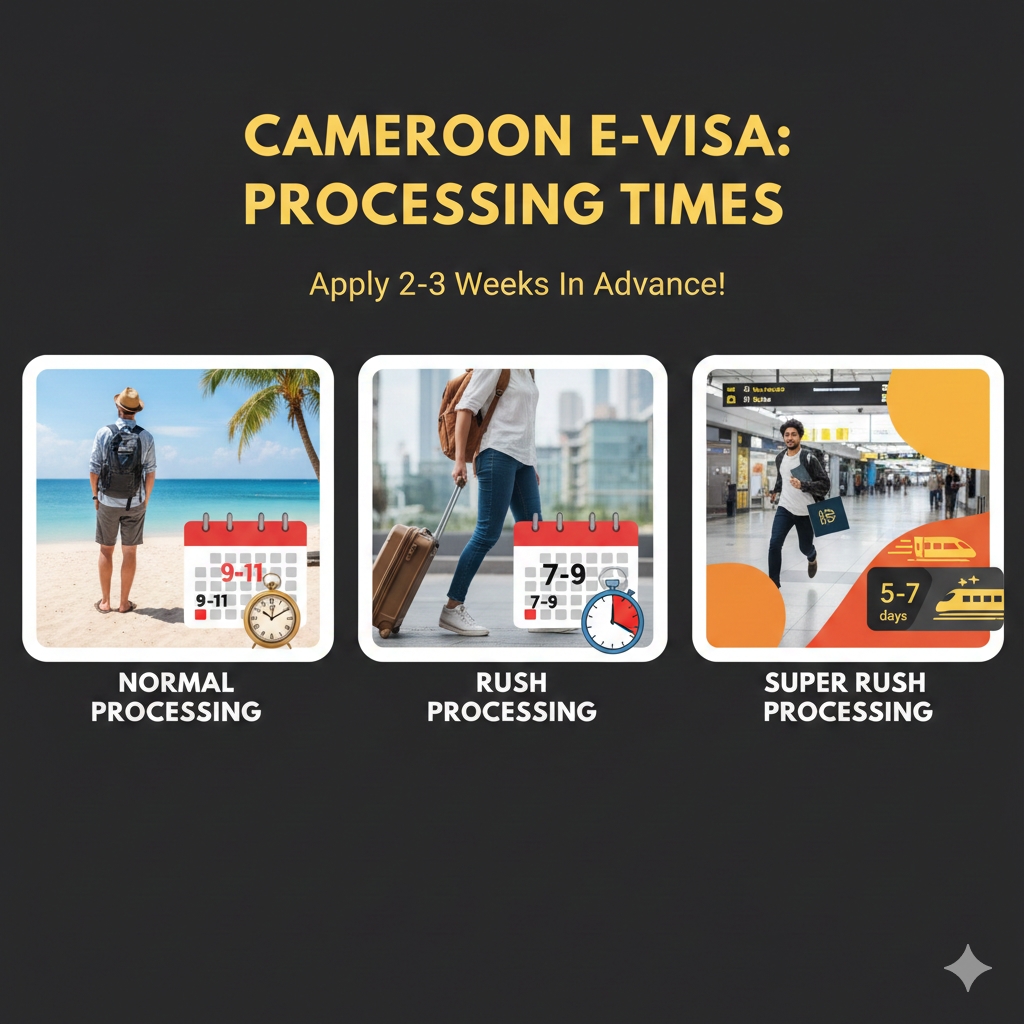
Normal Processing (9–11 Working Days): Standard review; longest wait time and lowest cost.
-
Rush Processing (7–9 Working Days): Faster priority handling for quicker approval.
-
Super Rush Processing (5–7 Working Days): Fastest option with top-priority review for Cameroon urgent visa travel.
Because processing can fluctuate depending on volume or time of year, it’s wise to apply well in advance — ideally at least 2–3 weeks before your travel date.
Can I get a visa on arrival in Cameroon?
No — as of current regulations, you cannot opt for visa on arrival if you’re a traveler requiring a visa.
That means applying ahead via the eVisa system is mandatory. It’s important to plan — last-minute arrival hoping for a visa on arrival could lead to being turned away at the border.
What happens if my Cameroon eVisa is rejected?
If your application is rejected, the eVisa authorization simply won’t be granted. That means you lose the ability to travel to Cameroon under that application. Often, you’ll receive a notification or a reason for rejection.
A rejection can be frustrating, but it’s not necessarily the end — you can try again, correcting any mistakes or missing documentation before reapplying. Planning in advance and preparing thoroughly helps avoid rejection.
What are the three reasons for visa rejection?
Based on guidelines and traveler reports, here are three of the most common pitfalls that lead to rejection:
-
Incomplete or incorrect documentation — for example, expired passport, missing vaccination certificate, unclear scan of the documents, or mismatched data.
-
Insufficient proof of accommodation or unclear travel purpose — if your hotel reservation or invitation letter is missing, invalid, or doesn’t match your travel dates, authorities may reject the application.
-
Application errors or inconsistencies — mismatched personal details, incorrect travel dates, or submission of wrong file formats (e.g., photo instead of scanned document) can lead to delays or outright refusal.
Avoiding these mistakes significantly improves your chances for approval.

How long is a Cameroon visa valid?
It helps to keep a clear picture of what each visa type means in terms of validity, number of entries, and permitted stay duration. Here’s a simplified overview — this can guide your decision based on travel plans:
|
Visa Type |
Entry Type |
Validity |
Max Stay |
|
Short-Stay (0–6 months) |
Single |
up to 6 months |
up to 6 months |
|
Short-Stay (0–6 months) |
Multiple |
up to 6 months |
up to 6 months (multiple visits) |
|
Long-Stay (6–12 months) |
Single |
up to 12 months |
up to 12 months |
|
Long-Stay (6–12 months) |
Multiple |
up to 12 months |
up to 12 months (multiple visits) |
|
Express Short-Stay (0–6 months) |
Single or Multiple |
up to 6 months |
up to 6 months |
|
Transit (1–4 days) |
Single / Multiple |
brief transit validity |
1–4 days |
|
Transit (Over 4 days) |
Single / Multiple |
depends on transit validity |
as needed for itinerary |
Keep in mind these are general guidelines — the actual authorization you receive might vary depending on the decision of the authorities.
How can I improve my chances of visa approval?
Here are practical tips — like a seasoned traveler — that can help your application succeed:
-
Double-check every document before submission: passport validity, clear scans/photos, matching data.
-
Make sure you upload a valid vaccination certificate (Yellow Fever or any required vaccines).
-
Provide a trusted proof of accommodation — a confirmed hotel booking or valid invitation/accommodation certificate.
-
Have a clear flight itinerary (round-trip), showing entry and exit dates.
-
Choose the right visa type relevant to your travel — single vs. multiple entry, short- vs. long-stay — and apply well in advance to avoid last-minute rushes.
-
If your plans are tight, consider opting for express (faster) processing, but still apply early.
-
Avoid services offering visa issuance — use the eVisa system to reduce risk of scams or errors.
With careful preparation and a little extra time, you’ll give yourself the best shot at a smooth approval.

What is the main airport in Cameroon?
If you’re arriving by air, your likely entry point will be the main international airport of the country: Douala International Airport. Many international flights land there, making it one of the top gateways for travelers entering Cameroon.
Another common airport is Yaoundé Nsimalen International Airport, which serves as the gateway to the political capital, Yaoundé. Depending on your itinerary and flight arrangements, one of these will likely be your port of entry.
What are the four touristic areas in Cameroon?
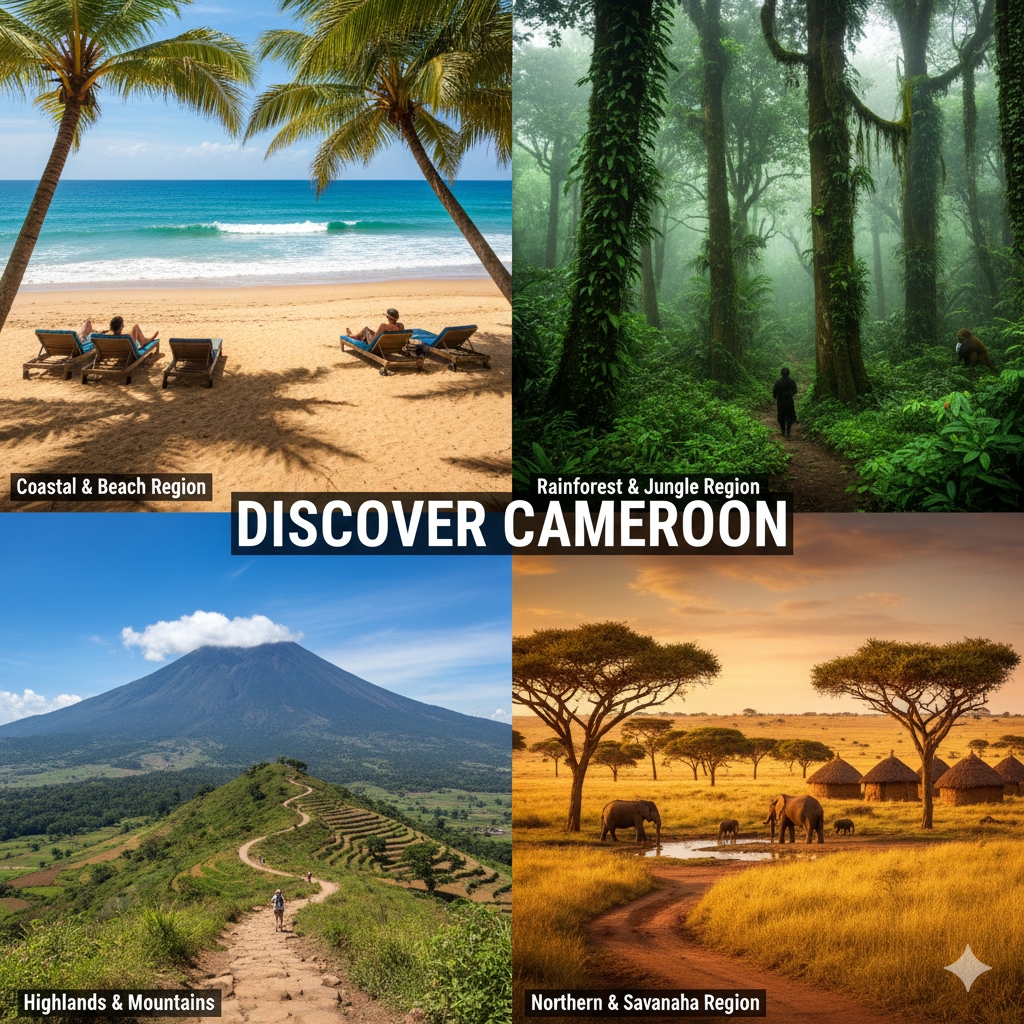
Cameroon is diverse — from lush jungles to coasts, mountains to savannas. Here are four of the most appealing touristic areas worth exploring:
-
The Coastal & Beach Region — where you can enjoy beautiful beaches, tropical weather, and sea-based relaxation.
-
The Rainforest & Jungle Region — rich with biodiversity, lush landscapes, and opportunities for wildlife and nature adventures.
-
The Highlands & Mountains — offering cooler climates, scenic hikes, and landscapes different from the lowlands or coast.
-
The Northern & Savannah Region — offering arid plains, savanna landscapes, and more remote, off-the-beaten-path cultural and natural experiences.
This variety means that whether you love beaches, trekking, wildlife, culture or simply diverse landscapes — Cameroon offers it all.
Is Cameroon safe to visit now?
Safety is never static, and conditions can vary by region. Overall, many parts of Cameroon — especially major cities and popular tourist zones — remain accessible to travelers visiting for tourism or business.
That said, some regions — particularly border areas or regions with historical tension — might require extra caution. As a traveler from Guinea-Bissau (or elsewhere), it’s wise to stay updated on local news, travel advisories, and to avoid traveling at night in unfamiliar or remote areas.
General common-sense precautions apply: keep copies of your documents, avoid showing valuables, and prefer trusted transportation. With awareness and planning, many travelers visit without issue.
Which month is best to visit Cameroon?
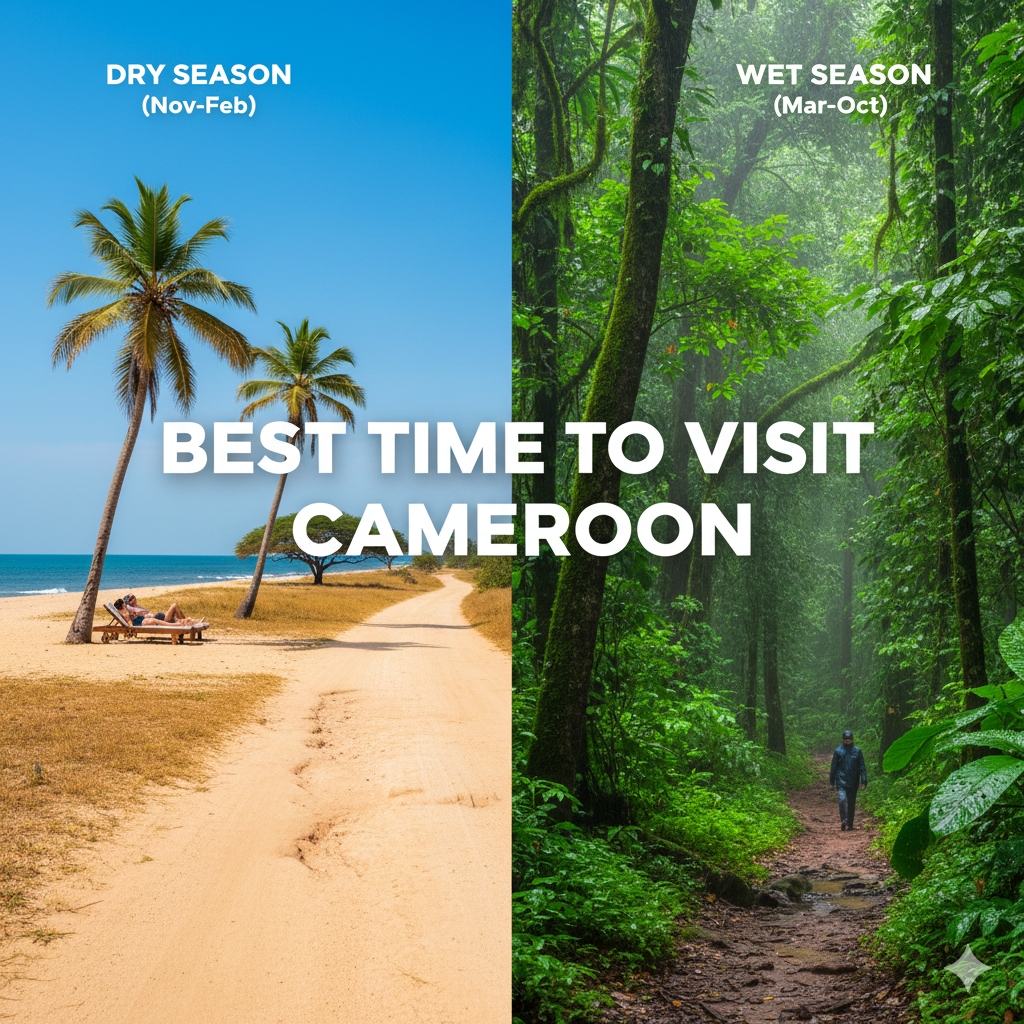
For many travelers, the dry season (roughly November to February) tends to be the most comfortable — especially in central regions like Yaoundé — because rainfall is lighter, and travel and outdoor plans are more predictable.
If you don’t mind some rain, other seasons can also offer lush green landscapes, rich flora and fauna (especially in rainforests), and fewer tourist crowds. Ultimately, it depends on what kind of experience you’re seeking: sunny beaches, green jungles, or cultural adventures.
Which is more beginner-friendly for first-time travelers—an e-visa agent or the government application portal?
If you’ve never applied for a visa (or eVisa) before, the steps — gathering documents, filling the form correctly, uploading scans, paying, waiting — can seem confusing. For many first-timers, having someone guide the process feels safer and simpler. That’s why comparing an e-visa agent versus the government portal is important. Which is more beginner-friendly? Which reduces stress and risk? Your choice can shape how smooth your trip begins.
The agent site (cameroon-evisa.org): What it advertises — and what to watch out for
Now let’s look at what the agent site claims, and also what external reviews and watchdog sources say about it.
-
They claim “faster approval” compared to traditional visa processes — even suggesting processing within 72 hours, or 24 hours with express service.
-
They promise a “simpler process”: you just upload documents online.
-
Users supposedly can track their application online anytime, giving transparency.
-
For some travelers (especially first-timers or those unfamiliar with visa forms), the agent’s “help with application” — guiding uploads, checking documentation, ensuring nothing is missing — may feel like a useful convenience (though this is more of an assumed benefit than a guarantee).
Because of these claimed conveniences, many people considering first-time travel may find the agent site appealing — especially if they feel unsure about filling all forms correctly or handling payment issues.
When using the Government site
-
Complex and Confusing Application Process: Forms often use technical terms and require detailed information that beginners may struggle to understand.
-
Limited or Slow Customer Support: Their help desks can take a long time to respond, leaving first-time travelers without immediate guidance.
-
No Assistance With Error Checking: The portal usually doesn’t alert users about small mistakes such as wrong photo size, unclear scans, or minor typos.
-
Rigid and Unfriendly site Interface: Many government sites have outdated designs or slow loading times, making navigation difficult for inexperienced users.
-
High Risk of Application Rejection Due to Mistakes: Because there is no personalized review, even simple errors can lead to rejection, requiring users to start over or repay fees.
Travel Advice for a Smooth Journey
-
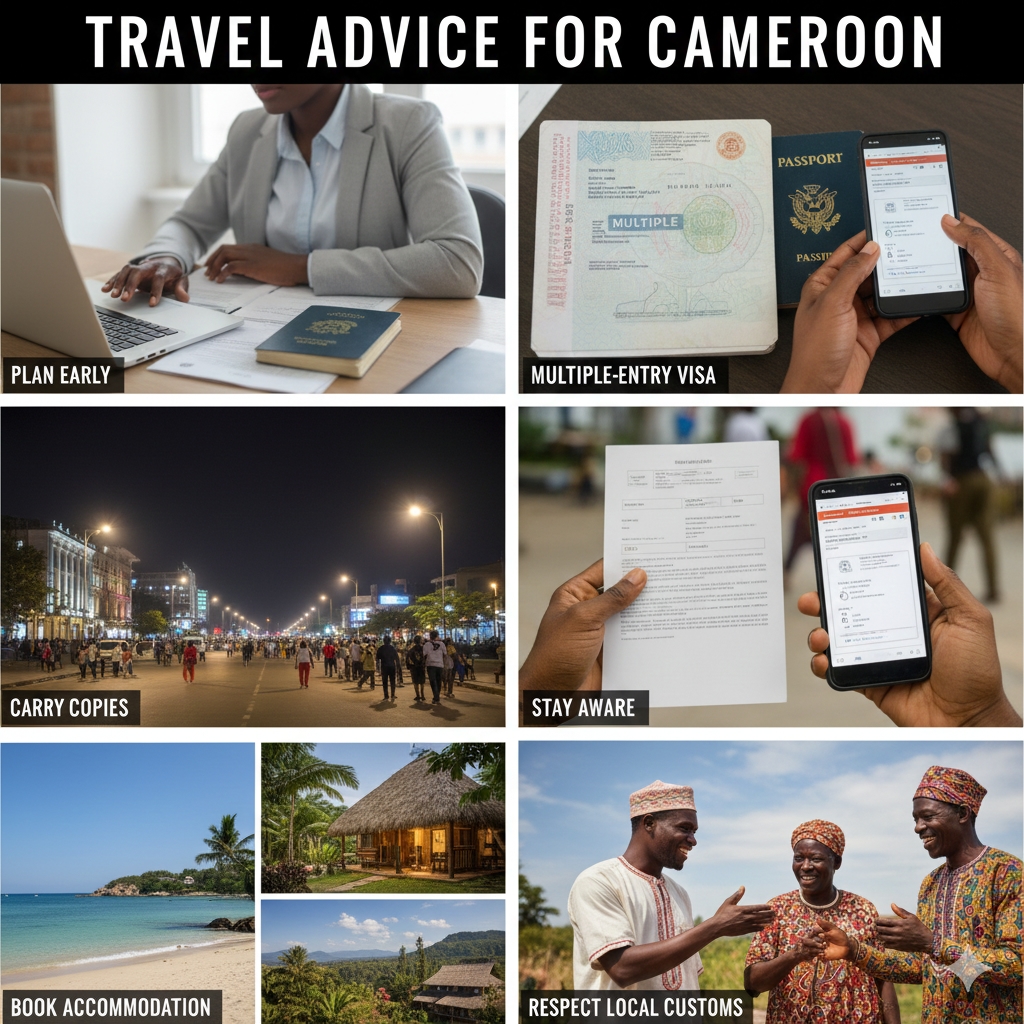
Start planning early — gather documents, get your vaccination certificate, and check flight dates.
-
If possible, opt for multiple-entry if you anticipate moving in and out of Cameroon during your travels.
-
Always travel with printed and digital copies of your visa authorization and passport.
-
Stay aware of local conditions and avoid less stable areas, especially at night.
-
Try to book accommodation in advance and have a clear itinerary, especially if you intend to explore various regions (coast, jungle, highlands, savanna).
-
Respect local customs, be open to cultural experiences, and travel responsibly — Cameroon has a diverse cultural and natural heritage waiting to be discovered.
Conclusion
Planning a trip from Guinea-Bissau to Cameroon? Then this “Cameroon e-Visa Guide for Citizens of Guinea-Bissau” is designed to be your trusted companion. From understanding the different visa types (short-stay, long-stay, express, transit), gathering the right documents, following step-by-step application instructions, to learning about processing times and travel best practices — this guide covers it all.
With careful preparation, a well-organised application, and a reasonable timeframe, you can significantly increase your chances of a smooth approval and enjoy what Cameroon has to offer — from its stunning beaches and dense jungles to vibrant cities and calm savannas.
Remember: take your time, double-check everything, and travel with confidence. Cameroon awaits — and with the right approach, you can make your visit truly memorable.
FAQs (for eVisa to Cameroon)
Q: Can I get a visa on arrival if I didn’t secure eVisa in advance?
A: No. Cameroon does not offer visa on arrival for most foreign travellers. You must obtain the eVisa (or visa) before traveling.
Q: What happens if my eVisa is rejected?
A: If rejected, you will not be able to travel under that application. You can reapply, correcting any issues with your documentation and ensuring accuracy.
Q: How long should I wait to apply before traveling?
A: At least 2–3 weeks before your planned travel date to allow enough time for standard processing and potential delays.
Q: What if my plans change and I need multiple entries?
A: Choose a multiple-entry visa type (for short or long stay) — this allows you to leave and return within the visa validity period.
Q: What if I need to transit through Cameroon for just a few days?
A: Use a transit eVisa (1–4 days or over 4 days) depending on your itinerary — ensure your flight itinerary, onward ticket and transit documents are ready.