
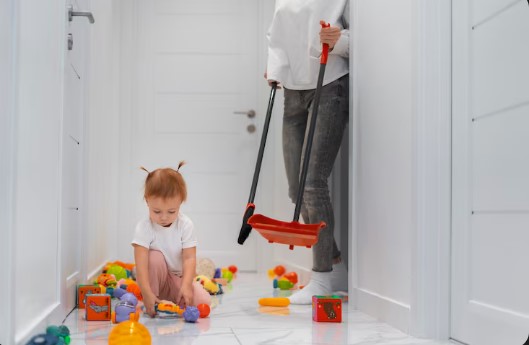
Some areas, like toilets, sinks, nappy change stations, and eating areas, are more prone to germs. Toys and play equipment can also carry microbes if not cleaned often. Regular childcare centre cleaning keeps these areas clean, and reduces the risk of children and staff getting sick.
The Critical Role of Hygiene in Child Care Bathrooms and Nappy Areas
Preventing the spread of illness
- Disinfection: Regularly disinfect high-touch surfaces like toilets, sinks, and door handles to kill germs. Child care cleaning company Adelaide prevents the spread of viruses and bacteria that cause illnesses like colds and flu.
- Reducing germ transmission: Strict hygiene protocols, especially after diaper changes or assisting with toileting, minimize the risk of cross-contamination.
- Protecting vulnerable immune systems: Young children have developing immune systems, making them more susceptible to infections that can spread easily in group settings. Proper hygiene creates a safer environment for them.
Teaching lifelong habits
- Early education: Teaching children proper bathroom hygiene from a young age, such as handwashing after using the toilet, instills habits that will benefit them throughout their lives.
- Promoting independence: Good hygiene practices empower children to care for themselves, which builds self-confidence and a sense of responsibility.
- Modeling behavior: Caregivers must model proper handwashing, cleaning up after spills, and other hygiene practices to teach children through demonstration.
Maintaining a clean environment
- Consistent cleaning: Establish a cleaning schedule that includes frequent disinfection, especially for areas soiled with body fluids.
- Proper handwashing: Implement a 20-second handwashing rule with soap and water, and ensure both staff and children wash their hands before eating, after using the bathroom, and after activities like blowing noses.
- Cleanliness is key: Proper hygiene is a holistic practice that requires attention to detail in all aspects, from cleaning up a child’s nose to ensuring the entire bathroom area remains sanitary.
Essential Daily Cleaning Tasks for Bathrooms and Nappy Rooms
Essential Daily Tasks for Bathrooms
- Clean and disinfect sinks and countertops: Wipe down these surfaces with a disinfectant solution, paying attention to the area around the faucets and drain.
- Scrub and disinfect toilets: Pour cleaner into the bowl, scrub with a toilet brush, then flush. Use a separate cloth and disinfectant to wipe the toilet seat, lid, handle, and exterior including the base.
- Wipe down high-touch points: Use a disinfectant wipe or spray on light switches, door handles, cabinet pulls, and handrails.
- Replenish supplies: Ensure there is enough toilet paper, soap, and paper towels.
- Empty trash bins: Remove all rubbish and replace bin liners.
- Spot-clean mirrors: Quickly wipe away any water spots or smudges on the mirror.
- Maintain floors: Sweep or vacuum hard floors to remove hair and debris, and spot-mop any spills immediately.
- Promote ventilation: Keep a window open or the extractor fan running for at least 15-20 minutes after use to reduce humidity and prevent mold growth.
Essential Daily Tasks for Nappy Rooms/Changing Stations
- Sanitize changing surfaces: Clean the nappy-change mat/surface with detergent and water and then sanitize it with an appropriate disinfectant after each use.
- Empty nappy bins frequently: Nappy pails should be emptied and sanitized regularly, ideally before they are full, and fitted with fresh liners.
- Dispose of waste hygienically: For cloth nappies, solid waste should be emptied into the toilet, and the nappy stored in a sealed “wet bag” for laundering off-site.
- Restock changing supplies: Ensure an adequate supply of fresh nappies, wipes, gloves, paper towels, and plastic bags is readily available.
- Clean sinks and faucets: Sanitize the sink area used for handwashing.
- Follow hand hygiene procedures: Staff must wash their hands thoroughly after every nappy change.
High-Risk Zones: Where Germs Spread Most Quickly
Common High-Risk Zones
- Public & Shared Spaces
-
- Public Restrooms: Sinks, faucet handles, and soap dispensers are often germier than the toilet seat itself due to inconsistent hand hygiene practices.
- Transportation Hubs: Escalator handrails, elevator buttons, and self-serve touch screens in airports and train stations are touched by hundreds of people and rarely cleaned between uses.
- Shopping Environments: Shopping cart handles and point-of-sale keypads harbor high levels of bacteria, including E. coli and salmonella, as people handle them while shopping for food.
- Gyms & Playgrounds: Equipment at gyms and public playgrounds can be home to a wide range of germs due to moisture from sweat and grubby hands, especially in sandboxes, which are rarely cleaned.
- Offices: Shared items like coffee maker reservoirs, computer keyboards, and breakroom appliance handles can breed bacteria and viruses. Desktops, which are often not cleaned regularly, can harbor more bacteria than a toilet seat.
- Restaurants: Menus that are often handled but rarely wiped down, condiment bottles, and water fountain spigots are common germ hot spots.
- The Home
The kitchen and bathroom are generally the most germ-infested areas, primarily due to frequently touched surfaces.
- Kitchen Items: Dish sponges, rags, cutting boards especially if used for both raw meat and vegetables and sink drains are major culprits.
- High-Touch Surfaces: Light switches, refrigerator handles, stove knobs, TV remotes, and personal electronics like cell phones are often overlooked during cleaning.
- Laundry Rooms: Wet laundry left in the washing machine for extended periods can allow germs to flourish; using hot water is more effective at killing bacteria.
Factors Accelerating Germ Spread
- Human Contact: Hands are highly effective at picking up germs from surfaces and spreading them to other people or items.
- Surface Type: Germs and viruses tend to survive longer on hard, non-porous surfaces like plastic and stainless steel compared to soft, porous materials.
- Moisture & Warmth: Moist and sometimes humid environments, such as bathrooms, kitchens, and standing water in appliances, provide ideal conditions for microbial growth.
- Population Density & Mobility: Crowded living conditions, high population density, and increased human mobility including international travel are significant drivers of rapid disease transmission.
- Temperature “Danger Zone”: Food poisoning bacteria grow most rapidly in the temperature range of 40°F to 140°F (5°C to 60°C), often called the “Danger Zone”.
Key Preventative Measures
- You can help prevent the spread of germs by practicing good hygiene and cleaning habits:
- Wash your hands frequently and thoroughly with soap and water for at least 20 seconds, especially after using the bathroom, before and after handling food, and after being in public.
- Use hand sanitizer when soap and water are unavailable.
- Continuously cleaning and disinfecting high-touch surfaces in your home, workplace, and travel accommodations using appropriate disinfectants.
- Avoid touching your face (eyes, nose, and mouth) with unwashed hands to prevent germs from entering your body.
- Practice respiratory hygiene by coughing or sneezing into a tissue or your elbow.
Deep-Cleaning Requirements and How Often They’re Needed
Deep-Cleaning Requirements
A deep clean involves a meticulous, top-to-bottom approach for the entire space. Key requirements and tasks for a home deep clean include:
- Top-to-bottom dusting: Starting from ceiling fans and light fixtures, then moving to walls, trim, baseboards, and furniture to ensure all dust falls to the floor to be vacuumed last.
- Thorough appliance cleaning: This includes inside the oven, microwave, and refrigerator, as well as cleaning the washing machine, dishwasher, and condenser coils of the fridge.
- Detailed bathroom sanitation: Scrubbing grout lines, descaling showerheads, removing soap scum from tubs and shower doors, and thoroughly disinfecting all surfaces and drains to prevent mold and mildew buildup.
- Window and blind cleaning: Washing window panes (inside and out), cleaning screens, and dusting or washing blinds and curtains.
- Upholstery and carpet treatment: Vacuuming upholstery, shampooing or steam cleaning carpets, and washing large items like comforters and pillows.
- Hard-to-reach areas: Cleaning under and behind large furniture and appliances, inside cabinets and drawers (after emptying and decluttering), and cleaning air vents.
Recommended Frequency
The ideal frequency for deep cleaning depends heavily on household size, lifestyle, and health factors:
- Average Households (single or couple, no pets/allergies): Every 4-6 months, or twice a year such as traditional spring and fall cleaning.
- Households with Kids, Pets, or High Traffic: Quarterly (every 3-4 months) is often necessary to manage pet dander, dirt, and allergens effectively.
- Individuals with Allergies or Respiratory Issues: A more frequent schedule, such as every 2-3 months, may be needed to improve indoor air quality and reduce irritants.
Commercial Spaces:
- Low traffic offices: Bi-annual or quarterly deep cleans.
- High traffic offices, clinics, or restaurants: Monthly or bi-monthly deep cleans to maintain hygiene standards.
- Rental/Airbnb Properties: A deep clean (turnaround clean) is necessary after every guest checkout to meet sanitation expectations
Choosing Safe, Child-Friendly Cleaning and Disinfecting Products
What to look for
- Third-party certifications: Look for third-party certified products with seals like the EPA’s Safer Choice or Design for the Environment (DfE) logo.
- Specific active ingredients: When disinfectants are needed, choose those with safer active ingredients like hydrogen peroxide, lactic acid, or citric acid.
- Fragrance-free options: Select products that are fragrance-free or scented with natural essential oils instead of synthetic fragrances.
- Hypoallergenic and non-irritant: Check for products that are specifically labeled as non-irritant to minimize skin and respiratory irritation.
- Specific product types: For high chairs and toys, look for products formulated specifically for those surfaces.
What to avoid
- Harsh chemicals: Avoid products with ammonia, chlorine bleach, phosphates, and synthetic fragrances.
- “Danger” or “Warning” labels: Do not buy products that have “danger” or “warning” on the container, as these often indicate the presence of harsh chemicals.
Simple, homemade options
- For all-purpose cleaning: A simple mixture of equal parts white vinegar and water can be effective for many surfaces.
- For floors: Use a solution of warm water and baking soda.
- For toys: For many plastic or rubber toys, soap and water or diluted hydrogen peroxide can be used.
Other tips for safe cleaning
- Read the label: Always read and follow the directions on the product label, especially for disinfectants, as pre-cleaning may be necessary.
- Sanitize vs. disinfect: Use sanitizers for everyday cleaning and disinfectants sparingly. For most daily uses, a sanitizer will suffice.
- Ensure good ventilation: Open windows or use air purifiers to improve air quality when cleaning to help remove airborne chemical irritants.
- Use microfiber cloths: Microfiber cloths can trap dust and dirt effectively without the need for harsh chemicals.
Staff Hygiene: Handwashing, Gloves, and Cross-Contamination Prevention
Handwashing
- When to wash: Always wash hands before and after using gloves, after touching a patient or their environment, or if they are visibly soiled. This is a fundamental practice, even when wearing gloves.
- How to wash:
- Wet hands with clean, running water.
- Apply soap and lather hands for at least 20 seconds, including the backs of hands, between fingers, and under nails.
- Rinse thoroughly and dry hands.
- Why it’s important: Handwashing is the single most important way to prevent the spread of infection, and it is necessary even if gloves are worn.
Gloves
- When to use: Use gloves when there is a risk of contact with blood, body fluids, or other potentially infectious materials.
- Correct use:
- Wear gloves only for the specific task and discard them immediately after use or if they become damaged.
- Change gloves between patients and when moving from a contaminated body site to a clean site on the same patient.
- Never wash or reuse disposable gloves.
- Avoid touching anything outside the immediate task area while wearing gloves, like personal items, to prevent contamination.
- Always perform hand hygiene before putting on gloves.
Cross-contamination prevention
-
- The role of hands and gloves: Hands can become contaminated even through gloves, as gloves can have microscopic defects or bacteria can transfer during improper use.
- Preventing spread:
- Never wear the same pair of gloves for more than one patient or task.
- Ensure you change gloves immediately after they have been in contact with a soiled area or after completing a task.
- Clean hands immediately after removing gloves to avoid spreading germs.
- To protect bare skin, cover any cuts or open sores on your hands with an occlusive dressing before wearing gloves.
Conclusion
Maintaining strict hygiene practices in bathrooms and nappy areas is far more than a regulatory requirement—it is a foundational part of keeping children healthy, safe, and comfortable in child care settings. These spaces are high-risk zones where germs can spread fast if proper procedures are not followed. By implementation of consistent cleaning routines, using the right products, training staff thoroughly, and creating accountability systems, centres can consistently reduce the likelihood of illness outbreaks and cross-contamination.
FAQ
- Why is strict hygiene in bathrooms and nappy areas so important in child care centres?
These areas are high-risk for contamination due to frequent contact with bodily fluids, shared surfaces, and young children’s developing immune systems. Proper hygiene prevents outbreaks of common illnesses such as gastroenteritis, colds, and skin infections.
- How often should bathrooms and nappy areas be cleaned?
Bathrooms and nappy areas should be cleaned and disinfected multiple times per day, with thorough cleaning at the end of each day. High-touch surfaces—like toilet seats, tap handles, nappy change mats, and door handles—require more frequent disinfecting.
- What products should be used for cleaning and disinfecting?
Use child-safe, centre-approved disinfectants that meet regulatory standards. Products must be suitable for removing germs associated with bodily fluids, and should always be used following manufacturer instructions for dwell time.
- How can staff reduce cross-contamination during nappy changes?
Staff should wash their hands before and after each change, use disposable gloves, clean and disinfect the change mat after every use, and never reuse wipes, gloves, or protective liners. Proper disposal of nappies also helps prevent contamination.
- What is the correct way to dispose of nappies and contaminated waste?
All nappies and wipes should be placed in lined, hands-free bins with tight-fitting lids. Bins must be emptied frequently—at least daily or more often if full—and cleaned and disinfected regularly.