

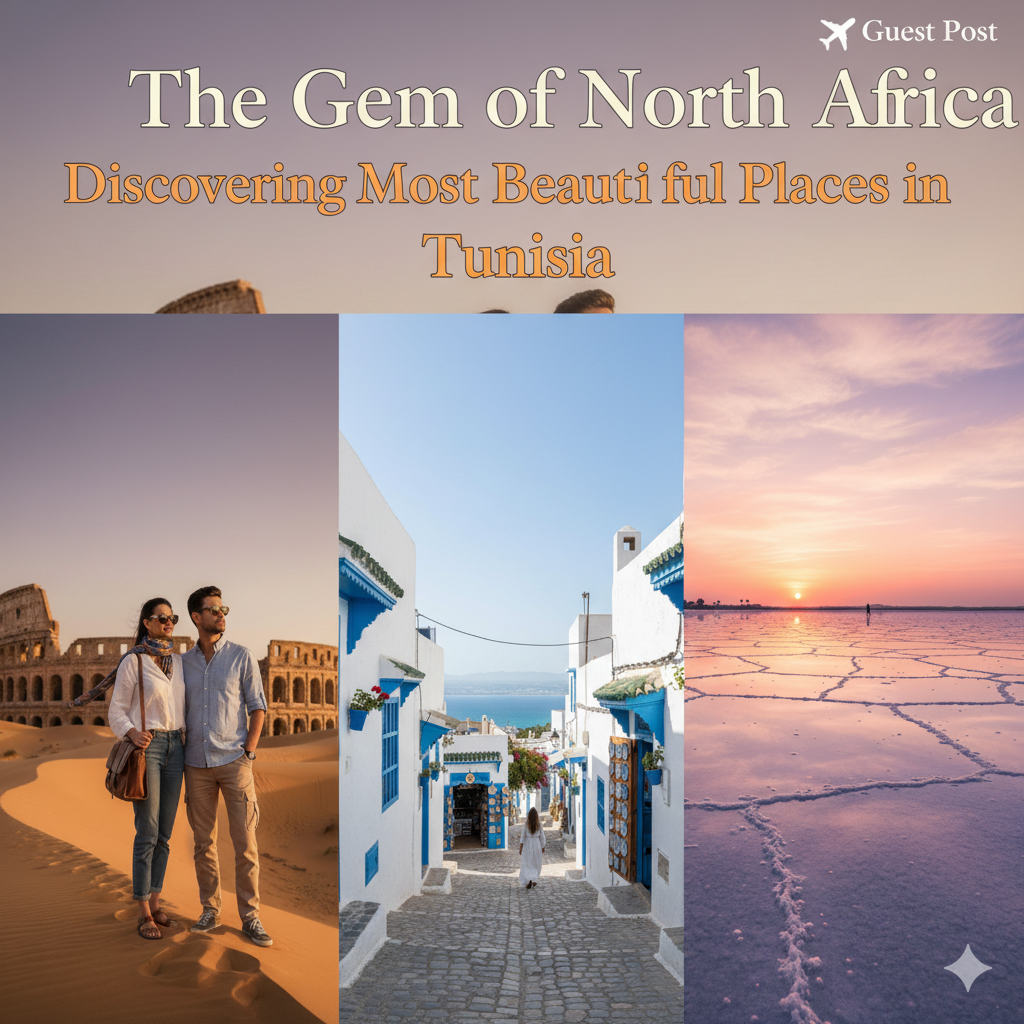
Tunisia. Just the name conjures images: the ancient whisper of Roman empires, the dazzling azure of the Mediterranean Sea, and the vast, silent, golden expanse of the Sahara. Forget everything you thought you knew about a standard beach trip. This country is an absolute powerhouse of culture, history, and stunningly diverse natural beauty.
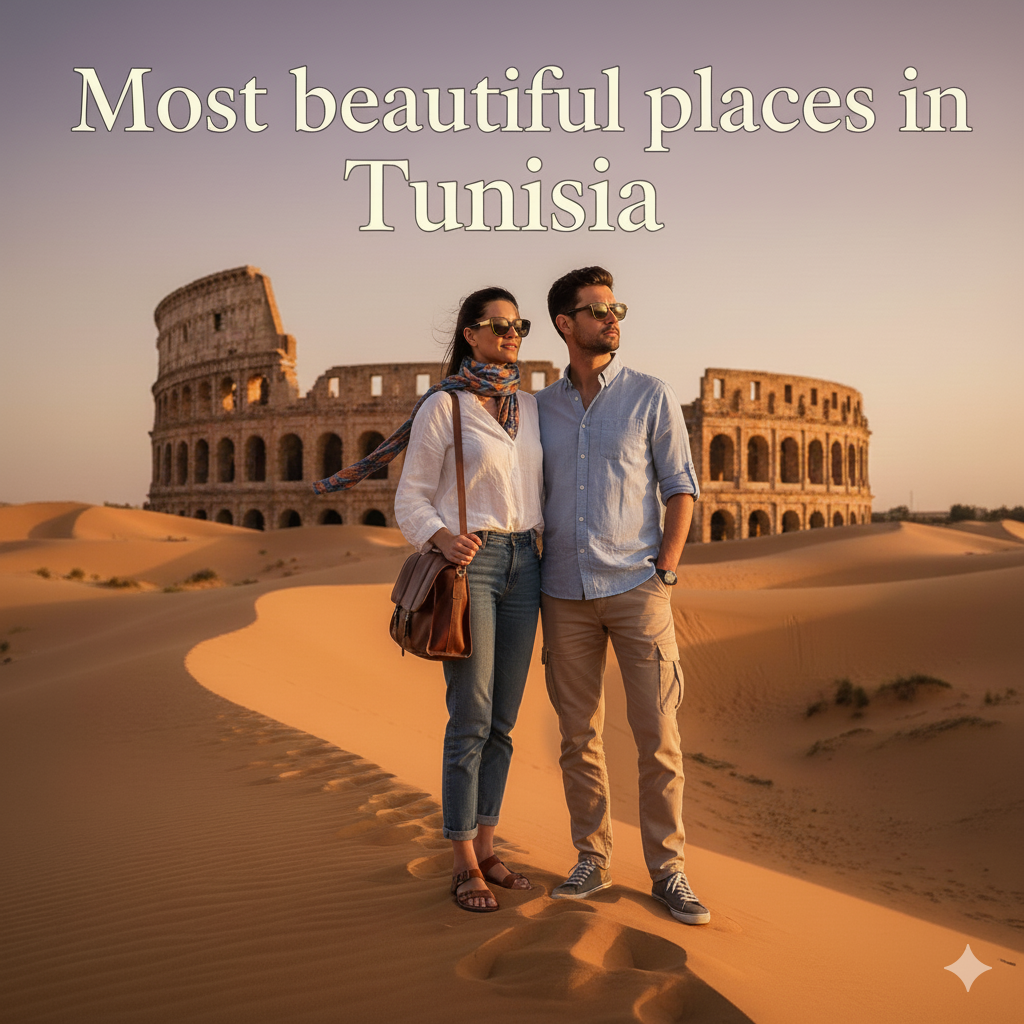
If your heart craves a destination that effortlessly mixes jaw-dropping archaeological sites with picture-perfect coastal towns and unforgettable desert adventures, this guide covers some of the most beautiful places in Tunisia that offer rich culture, stunning landscapes, and endless opportunities for exploration to inspire your inner explorer.
Historic & Cultural Highlights
History here isn’t just a lesson it’s everywhere you look. Tunisia is built literally on top of the ruins of the world’s greatest empires, making its ancient sites not just historically crucial but ridiculously photogenic. Imagine: colossal Roman amphitheatres standing tall next to one of the holiest cities in Islam. The cultural heart of this nation truly pulsates with life.
Which are the most photogenic ancient sites in Tunisia?
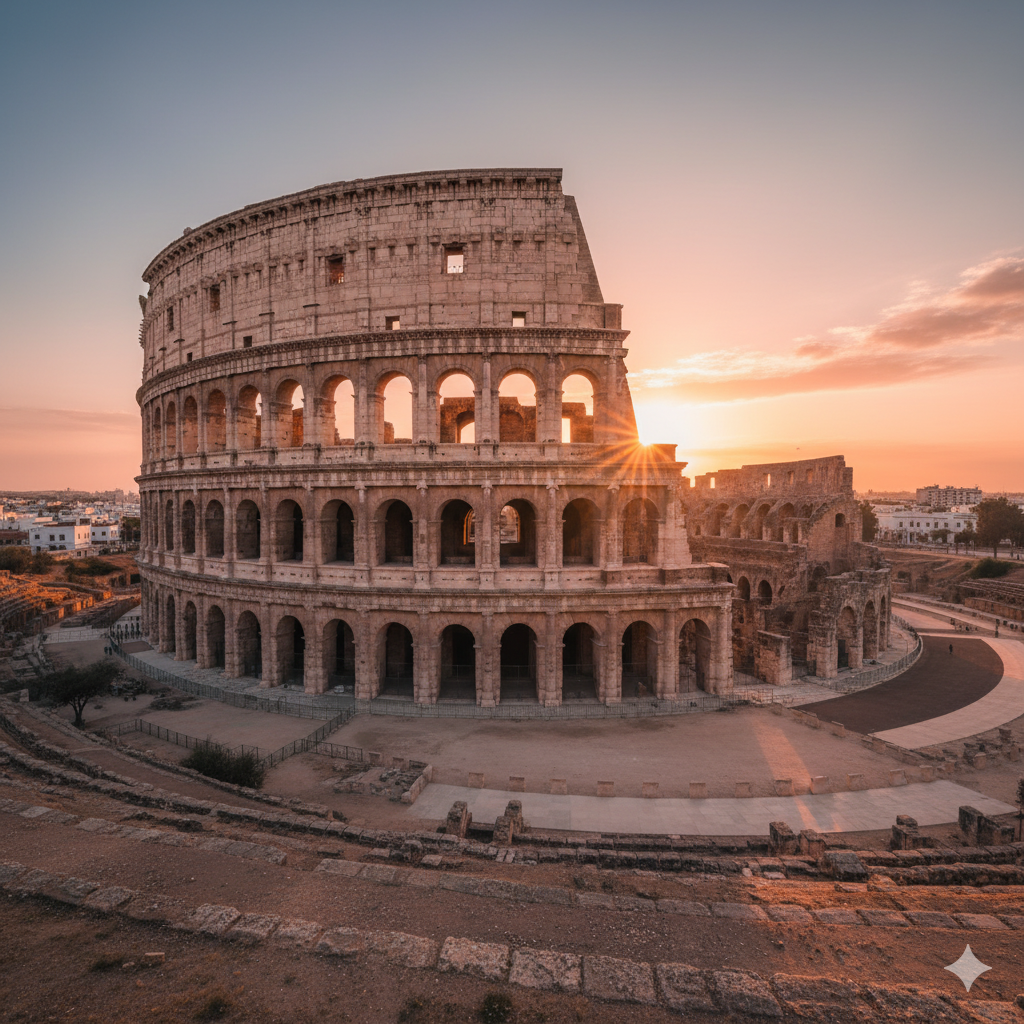
While you’ll find UNESCO sites sprinkled all over, two spots are absolute show-stoppers when it comes to visual impact: The Amphitheatre of El Jem and the breathtaking Roman city of Dougga (Thugga). El Jem, south of Sousse, is genuinely one of the most spectacular Roman ruins you’ll find anywhere; it seriously gives the Colosseum a run for its money! Built in the 3rd century AD, its three levels of arches are still remarkably intact. Its massive size and the way it just stands alone in the middle of a modern town make for incredible, clean shots, especially if you catch it at sunrise or sunset.
Then there’s Dougga. Tucked away beautifully in the rolling hills, this is often called the best-preserved Roman town in all of North Africa. Magic? It was never rebuilt, so you can still clearly see its original layout, including the powerful Capitol temple, theatre, and the ancient mausoleum, all framed by that gorgeous Tunisian countryside. Trust us, that view across the ruins is exactly what photographers dream about.
Is Carthage worth visiting for its scenic views?
A resounding Yes! Now, the famous ruins of Carthage (once the epic trading capital of the Punic world) are spread out across a wealthy, modern suburb of Tunis, but the site still delivers on stunning, cinematic views that perfectly link its incredible history to the Mediterranean. Head straight to Byrsa Hill, the old Acropolis. From this perfect spot, you can gaze out over the huge Gulf of Tunis, see the modern port, and imagine Hannibal’s fleet sailing in those same azure waters just below you.
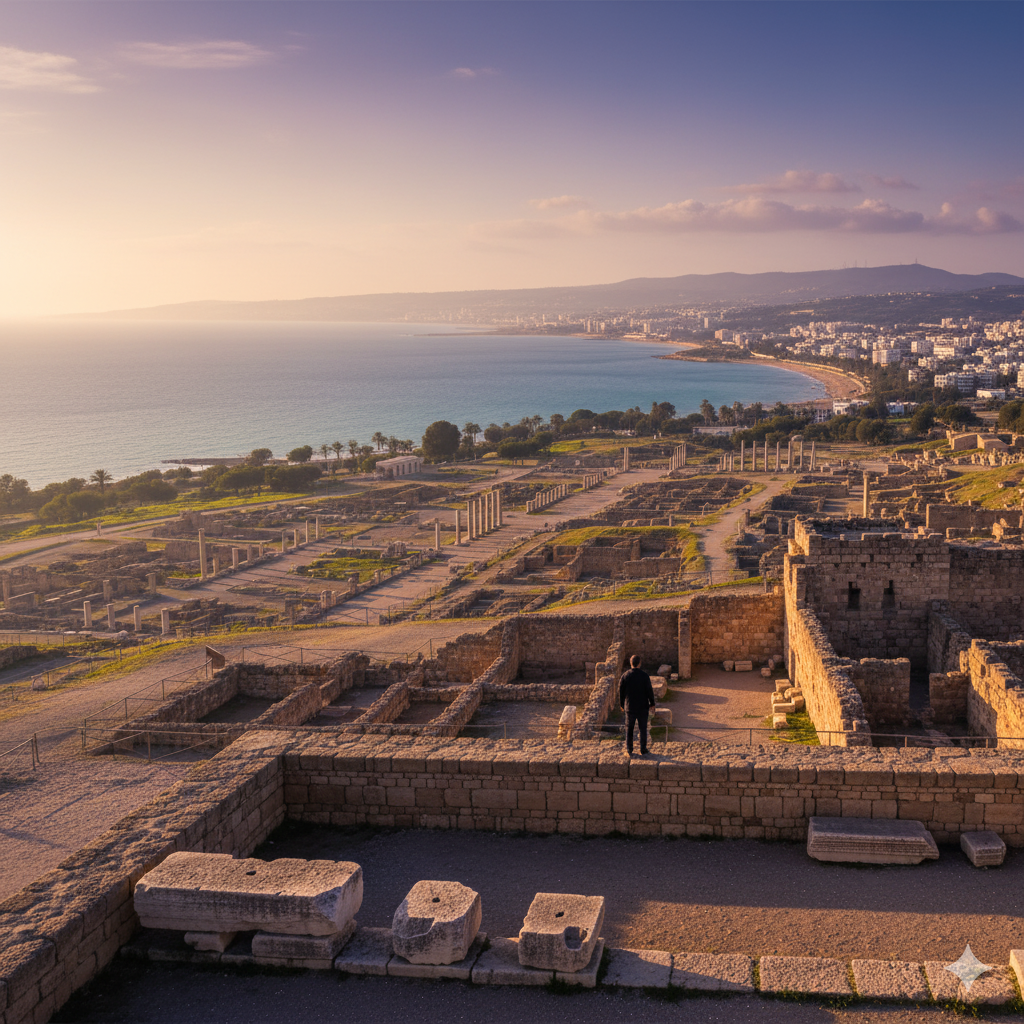
Don’t skip the colossal Baths of Antoninus; they show you just how massive the Roman city was, plus they offer fantastic, picturesque views of ancient arches meeting the glittering sea. Carthage isn’t just about ticking off a single ruin; it’s about standing where a superpower once stood, with a breathtaking Mediterranean backdrop.
What makes Kairouan one of the most beautiful cities in Tunisia?
Kairouan is seriously special. As a UNESCO World Heritage site and the former capital of Ifriqiya, it carries massive spiritual weight, it’s considered the fourth holiest city in Sunni Islam. You won’t find dazzling modern attractions here; its beauty comes from its deep Islamic history and irresistible medieval charm.
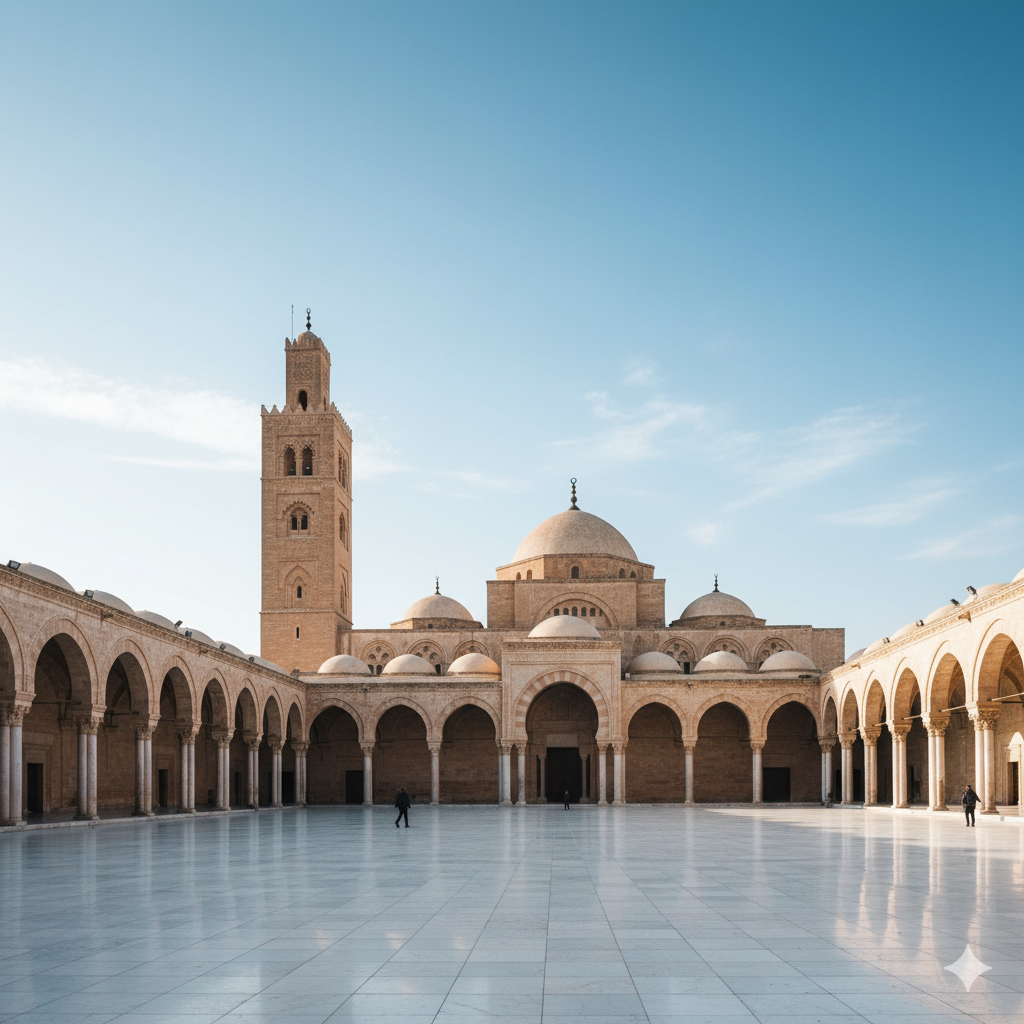
The definite must-see is the Great Mosque of Sidi Uqba, founded way back in 670 AD. Its huge courtyard, surrounded by pillared galleries, and the oldest minaret on the continent are simply mesmerizing with their serene symmetry and ancient stone. Wander through Kairouan’s walled medina, it’s a delightful maze of narrow, winding streets packed with traditional white and blue-washed homes. Known for its incredible carpets and local sweets, the city truly offers a genuine, untouched look at the Arabo-Muslim architectural legacy that shaped this entire region.
Coastal & Beach Destinations
With a huge 1,250 km of coastline, Tunisia is a Mediterranean dream. You’ll find everything from buzzing resorts and peaceful, hidden coves to iconic, charming villages. That unmistakable Mediterranean allure is absolutely everywhere, so carving out time for the coast is essential for any trip here.
Which beaches in Tunisia are the most picturesque?
If you’re looking for variety and mile after mile of golden sand, the Gulf of Hammamet is famous for having some of Tunisia’s best beaches, like Hammamet Beach itself with its soft sands and stunning turquoise waters. But maybe you want something quieter? For a more remote, jaw-droppingly picturesque vibe, you should explore the coastal stretches of the Cap Bon peninsula, think dramatic, jagged cliffs and natural thermal springs near Korbous—or the wilder coves up north around Tabarka.
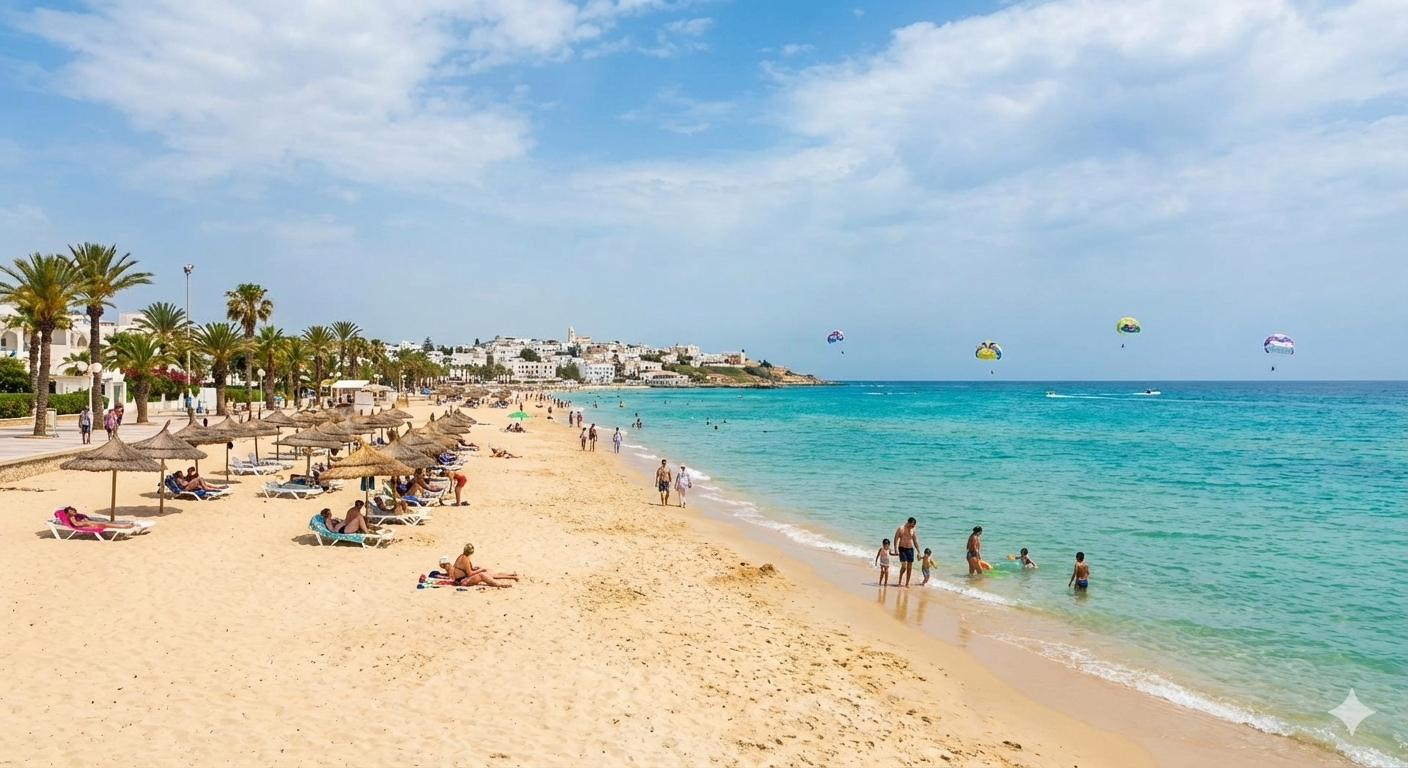
Here, the golden beaches are backed by rocky outcrops and pine forests, and the crystal-clear waters hide red coral. And for the ultimate escape? Djerba is a lovely island getaway with sandy beaches and a beautifully sleepy, whitewashed charm, rumored to be the mythical island of the Lotus-Eaters from Homer’s Odyssey.
Is Hammamet the best coastal town to visit?
Hammamet is definitely the most popular coastal town, especially if you’re a first-timer looking for that classic resort feel. Its charm comes from a delightful double life: you have the historic, fragrant, jasmine-scented Old Medina right by the fine sand, and then, a bit south, the ultra-modern Yasmine Hammamet district packed with hotels, marinas, and the Carthage Land amusement park.
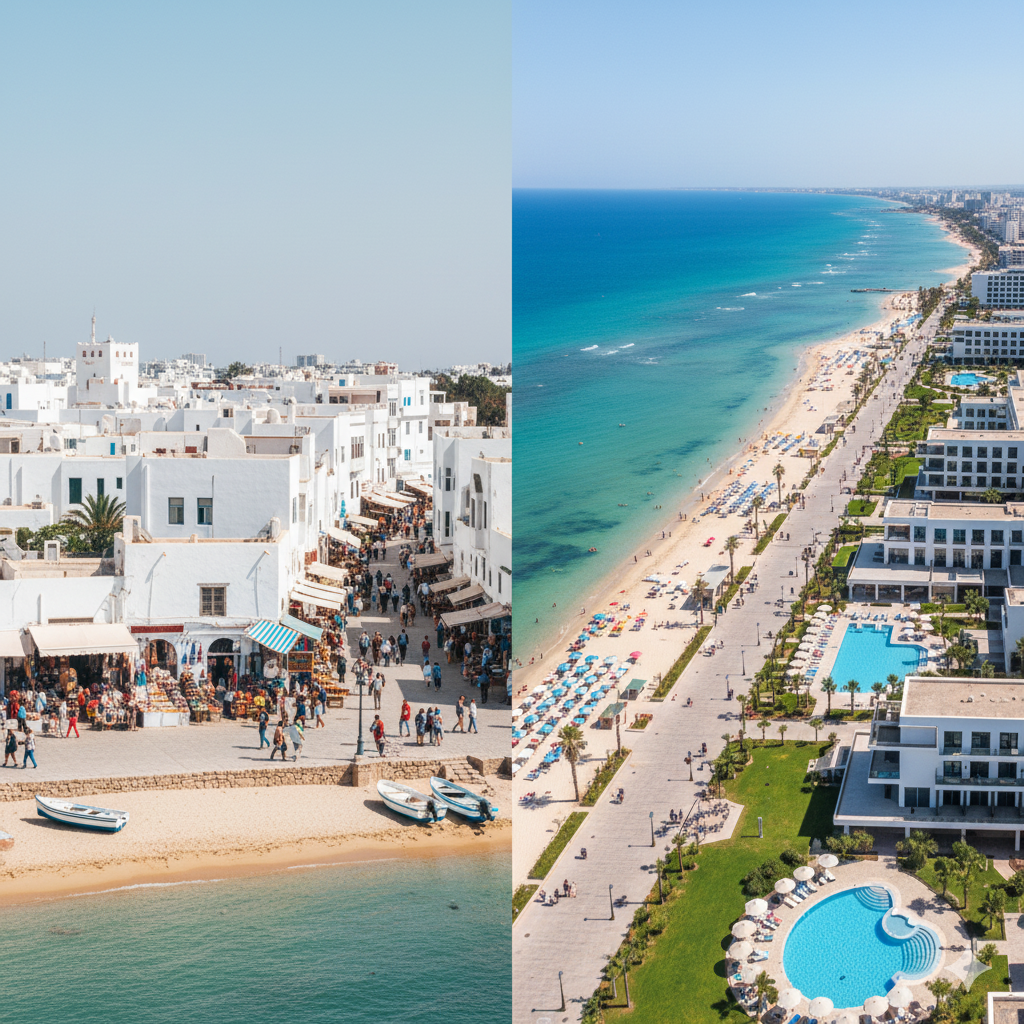
Is it the “best”? That totally depends on your travel mood! It’s perfect if you crave comfort, easy access, organized trips, and a lively night scene. But if you’re hoping for a quieter, more ‘local,’ or wilder experience, you might prefer gems like Sidi Bou Said, Tabarka, or Mahdia. Still, Hammamet works as an amazing home base for exploring the whole coastline and hitting up historic sites like Tunis and Carthage.
Can you explore Sidi Bou Said on a day trip from Tunis?
Absolutely, Sidi Bou Said is tailor-made for a day trip—or even just a quick half-day—from Tunis. It’s super close to the capital (and right by the Carthage ruins), so getting there is a breeze via taxi or the TGM light rail train. People often call it the “Santorini of North Africa,” and you’ll see why! This stunning clifftop village is an artistic paradise known for its gorgeous Andalusian style: brilliantly whitewashed walls set against those iconic, brightly painted blue doors and window shutters.
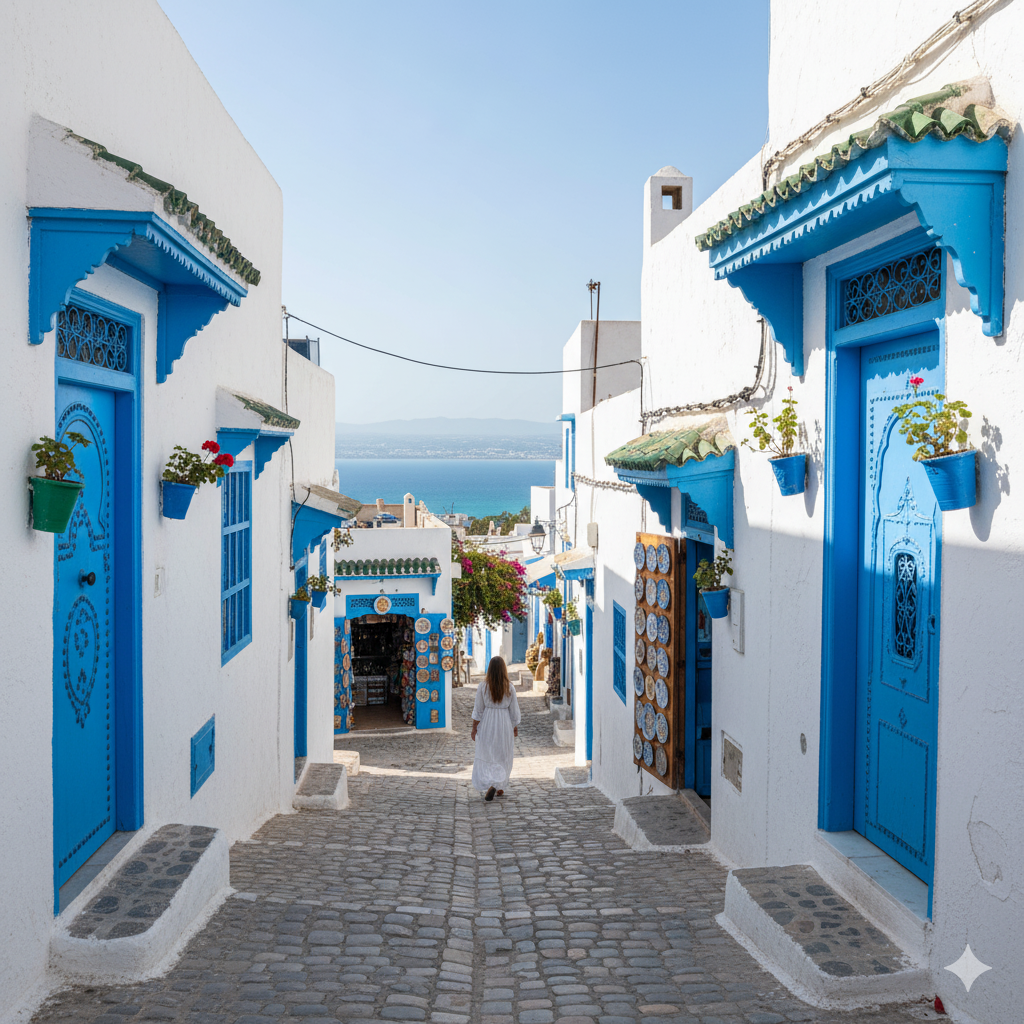
You’ll want to spend your time getting lost on the steep, cobblestone streets, checking out local art and ceramics, enjoying a sweet mint tea at the famous Café des Nattes, and taking in those incredible panoramic views over the Gulf of Tunis. Seriously, its unique, postcard-perfect look makes it a mandatory stop.
Desert & Unique Landscapes
Get ready for a dramatic change of scenery! Southern Tunisia takes you far away from the Mediterranean and plunges you into huge salt flats, cooling, lush oases, and the vast, legendary sweep of the Sahara Desert. This region promises pure adventure and movie-set-worthy landscapes.
What makes Tozeur and Matmata special for travelers?
Tozeur and Matmata are two spots that give you completely different, yet utterly special, insights into life in the Tunisian desert—and, yes, into its cinematic fame!

- Tozeur is the classic, stunning Saharan oasis. It’s famous for its enormous palm grove (we’re talking over 200,000 palm trees!). The medina here is something else, built with intricate, geometric patterns etched into the sandy-colored bricks. It’s the go-to spot for booking desert tours and, perhaps most famously, it’s surrounded by numerous Star Wars filming locations, including the iconic sets for Mos Espa.
- Matmata, on the other hand, is all about its incredible troglodyte architecture. The local Berber community here actually built their homes underground, digging large pits into the soft rock to create courtyard dwellings that keep them perfectly cool in summer and warm in winter. When you visit Matmata, you literally step onto a Star Wars set: the famous Hotel Sidi Driss was used as Luke Skywalker’s childhood home, the Lars Homestead! It’s an amazing way to experience an ancient, truly resilient culture.
Can you visit the Sahara Desert from Tunisia’s oasis towns?
Absolutely! Tunisia makes experiencing the vastness of the Sahara Desert incredibly easy, thanks to the well-developed infrastructure around its oasis towns. Douz, often affectionately called the “Gateway to the Sahara,” and Tozeur are your main jumping-off points for any desert excursion. You can easily book anything your adventurous heart desires, from short, single-day camel treks across the nearest dunes to epic multi-day 4×4 tours that dive deep into the Grand Erg Oriental.
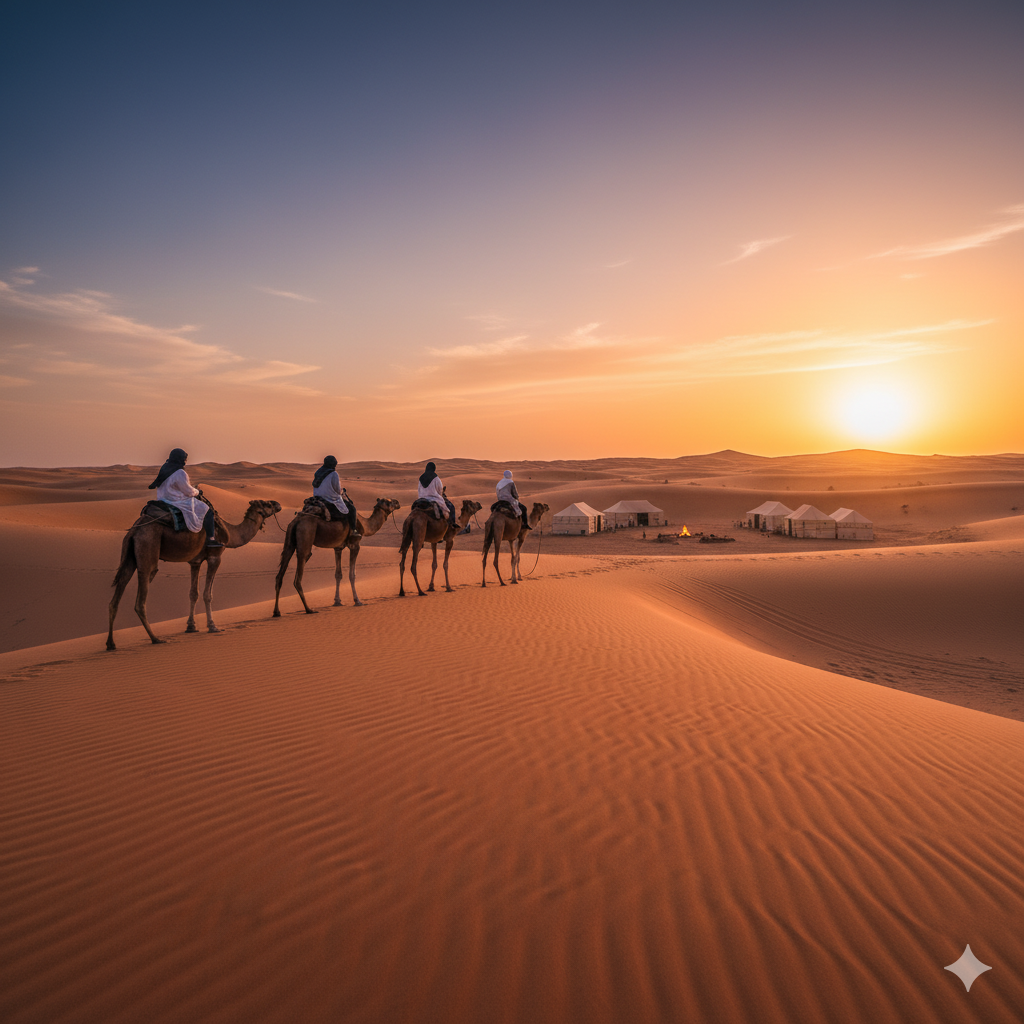
Extended tours often feature an unforgettable overnight stay in a traditional desert camp, picture enjoying a delicious Bedouin dinner and then witnessing some truly exceptional stargazing, totally free from city lights. A final must-see highlight is the desert oasis of Ksar Ghilane, where you can actually take a swim in a natural hot spring surrounded by a lush palm grove.
Which natural landscapes in Tunisia are best for photography?
The Sahara’s dunes are stunning, of course, but Tunisia hides several other unique natural vistas that are total goldmines for photography:
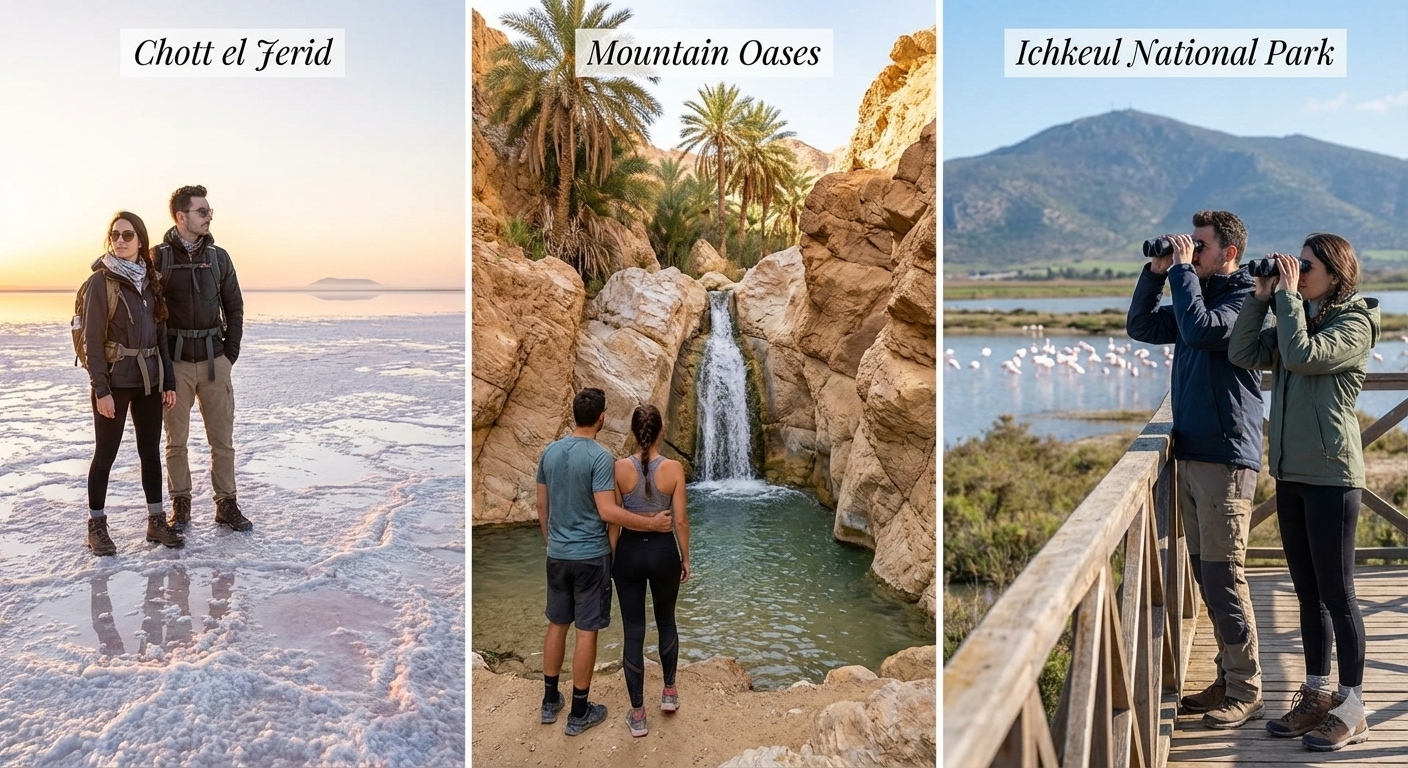
- Chott el Jerid: Located near Tozeur, this massive salt lake often looks like a mirage—a shimmer of white and pink—creating a truly ethereal, otherworldly landscape. Try to catch it at sunrise, it’s magic.
- Mountain Oases: These are amazing! Chebika, Tamerza, and Mides sit right where the Atlas Mountains kiss the desert, featuring dramatic canyons and refreshing waterfalls that offer a stunning, almost shocking, contrast to the arid land all around them.
- Ichkeul National Park: This is a UNESCO Natural Heritage site—a gorgeous lake and wetland area near Bizerte. It’s a vital pit stop for hundreds of thousands of migrating birds, including huge flocks of flamingos and storks. It’s an incredible spot for wildlife photography, especially from mid-October to February.
Planning & Travel Tips
Getting around and combining Tunisia’s wildly diverse regions is actually quite easy, especially if you plan ahead just a little bit to make the most of your time.
How many days are needed to see Tunisia’s most beautiful places?
To get a really great, balanced taste of Tunisia—history, coast, and desert—we recommend setting aside a minimum of 7 to 10 days.

- 2-3 Days: Stick to the capital area: explore Tunis, Carthage, and the seaside beauty of Sidi Bou Said.
- 3-4 Days: Head south to a coastal base (like Hammamet or Sousse) to enjoy the beach and take day trips inland to UNESCO sites like Kairouan and the Amphitheatre of El Jem.
- 2-3 Days: Dedicate this last chunk of time to the deep south. Book a desert tour from Tozeur or Douz, check out those Star Wars locations, and definitely do an overnight camp.
A full 10 days gives you a fantastic, relaxed pace and ensures you cover all three major regions comfortably.
What is the best time of year to visit Tunisia’s scenic spots?
Hands down, the best time to visit Tunisia is during the fantastic shoulder seasons: Spring (March to May) and Autumn (September to November).

The weather during these months is mild and simply perfect (think mid-60s to high-70s Fahrenheit), making it ideal for wandering ancient ruins like Dougga and trekking in the Sahara. The intense summer heat (June to August) can push temps into the mid-90s or higher, which can make exploring inland sites feel like a workout! (Though it’s peak season for the beach resorts.) Winter is usually mild, especially down south, but you might run into chilly, rainy days up north.
How can I combine historic, coastal, and desert destinations in one trip?
Doing all three regions is truly the best way to soak up everything Tunisia has to offer! A classic, well-trodden path follows the country’s main routes:
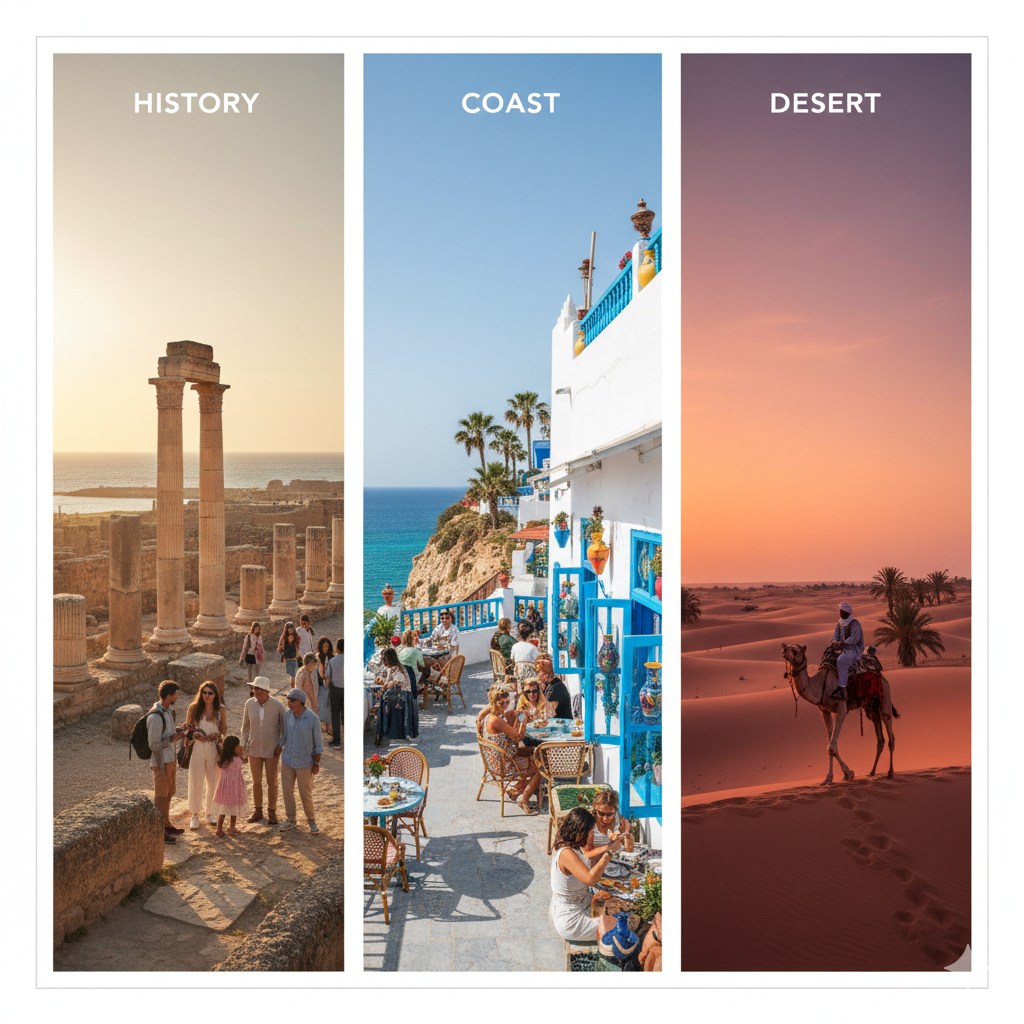
- Start in Tunis/Coastal Hub: Kick off your trip in the capital, checking out the Tunis Medina, Carthage, and the blue-and-white bliss of Sidi Bou Said.
- Move South (Coast/History): Hop in a car or take the train/bus south to a spot like Hammamet or Sousse. Use this as your base for chilling on the coast and hitting up those crucial inland day trips to Kairouan and El Jem.
- Venture to the South/Desert: This is the big pivot! Take a long-distance bus, catch a quick domestic flight (to Tozeur or Gabès), or, easiest of all, book a multi-day organized tour. These tours handle transfers from your coastal base right into the Saharan region, hitting Tozeur, Matmata, and Douz perfectly.
These organized 2- to 4-day “Sahara Express” tours are super efficient for mixing those historical central stops with the magic of the southern desert.
Visa Information
A quick check of Tunisia’s visa policy is always smart for a smooth trip, especially if you’re only visiting for a short time.
Can I enter Tunisia with a visa issued for another country?
The short answer is generally no. Tunisia runs its own show when it comes to visas. Unlike certain multi-country agreements (like the Schengen Area), holding a tourist visa or residency permit for another country (like a Schengen or US visa) won’t automatically get you into Tunisia.
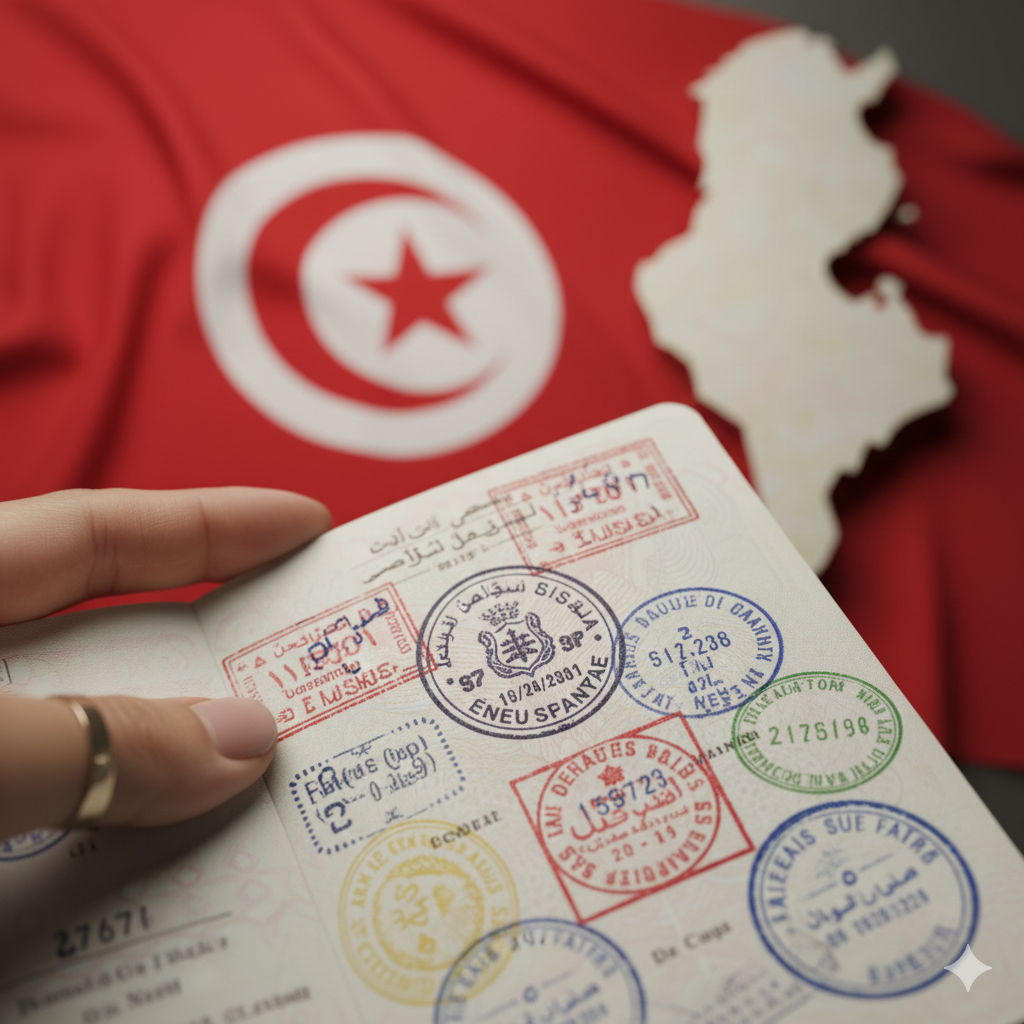
- Heads up for GCC Residents: If you live in a Gulf Cooperation Council (GCC) country (Bahrain, Kuwait, Oman, Qatar, Saudi Arabia, UAE) and have a resident permit valid for at least six months, you might qualify for a visa-on-arrival for a quick trip (usually up to 15 days). But remember, this is a specific exception, not a general rule.
- Your Action Item: Seriously, always double-check your specific nationality’s requirements with a Tunisian embassy or their official government website before you fly.
Is a visa required to visit Tunisia for just a weekend trip?
Great news for many travelers! If you’re from the United States, Canada, most European Union countries, or key Asian countries like India, you generally don’t need a visa for short tourist trips, including a quick weekend getaway. However, before you travel, it’s important to check the Tunisia Visa Document Requirements to ensure you meet all the necessary criteria. Most of these visa-exempt travelers can stay for up to 90 days (three months) just for tourism without needing to apply for anything in advance.

Just make sure you have these key things ready:
- Your passport, valid for at least six months past your entry date.
- A ticket showing you plan to leave or return home.
- Proof that you have enough cash and a place to stay (like a hotel reservation).
Now, if your passport isn’t on the visa-exempt list, even a one-day trip means you’ll need a pre-arranged visa or maybe an e-visa (if that’s an option for your nationality). As always, confirm the latest rules based on your specific passport before you go!
Seriously, Tunisia is an incredibly rewarding destination. It’s like getting three amazing holidays wrapped into one trip: the sheer majesty of ancient civilizations, the irresistible charm of the Mediterranean coast, and the deep, spiritual tranquility of the Sahara. Go plan your journey now, and get ready to capture some of the most beautiful and historically rich sights North Africa has ever unveiled.