

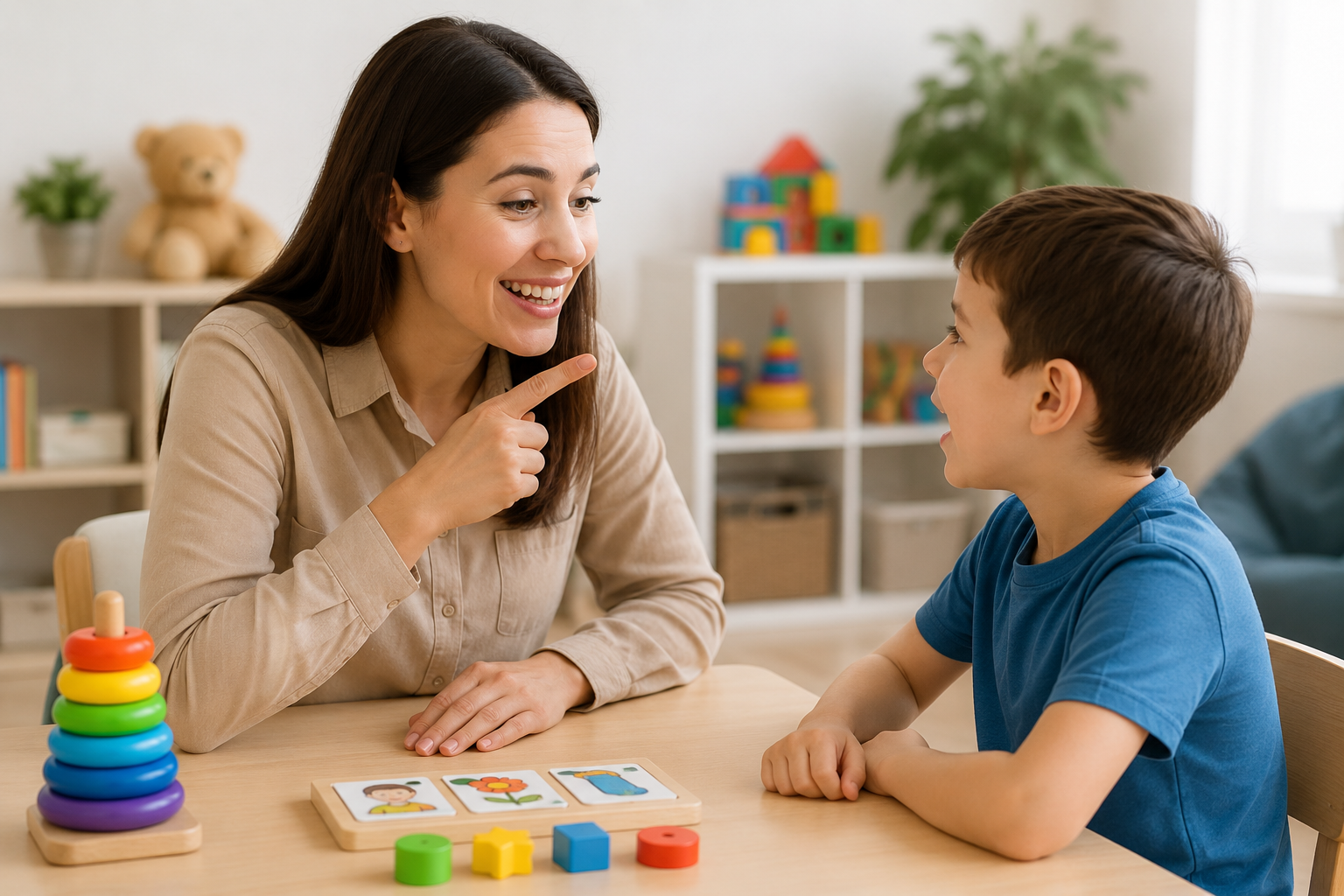
ABA therapy helps children learn a wide range of skills that support communication, behavior, independence, and social development. The therapy uses structured teaching methods and positive reinforcement to help children understand and practice important daily life skills in a supportive environment.
Children participating in ABA therapy may work on communication skills such as speaking, understanding instructions, expressing emotions, asking for help, and improving conversation abilities. For children who are nonverbal or have limited speech, therapists may also introduce alternative communication methods such as picture systems or assistive communication devices.
ABA therapy also supports social development by teaching children how to:
- Interact with peers
- Take turns during activities
- Understand social cues
- Maintain eye contact
- Participate in group settings
- Build friendships and cooperative play skills
Daily living and self-care skills are another important focus area. Therapists may help children learn:
- Dressing independently
- Brushing teeth
- Washing hands
- Toilet training routines
- Organizing personal belongings
- Following household routines
- Eating and mealtime behavior
Behavioral support strategies are used to reduce behaviors that may interfere with learning or daily activities while encouraging positive and functional behaviors. ABA therapy programs are personalized so that goals are based on the child’s age, strengths, developmental needs, and family priorities.